
As a freelancer, you know how to write, but you don’t know how to get paid for it. And that’s where the frustration of how to get your first client converts into grave concern.
Twitter threads promise overnight breakthroughs. Screenshots of $5,000 invoices flood your feed. None of it tells you what to do on Monday morning.
One client is enough to start. A client who pays you what you’re worth, trusts your work, and gives you a case study to build the next 5 clients on.
This guide covers 4 steps of how to get your first client as a freelancer: finding the right client – pricing your first project – building an offer – closing the deal.
How to get your ideal client
A client who has no budget, no clear offer, and no patience will drain you for months and pay you nothing worth keeping.
Before you pitch anyone, check for 3 things.
1. They have money.
A client with budget doesn’t need convincing that $500 is a fair price. They need convincing that you’re the right writer. That’s a faster sale.
2. They have a product or service to sell.
No product means no content need. A solo founder testing an idea with no landing page and no customers isn’t ready for a content writer yet.
A SaaS products based company with paying users and a blog that hasn’t published in 4 months is.
3. They’re already moving.
Look for signs of activity:
- a recent funding announcement,
- a new hire in marketing,
- a product launch,
- a job posting for content help that went unfilled.
Momentum means budget gets released faster.
Where to find them:

| Channel | What to look for |
|---|---|
| Founders and marketing leads posting about growth, hiring, or content gaps | |
| X (Twitter) | Indie hackers and SaaS founders building in public |
| Niche Slack/Discord communities | Marketing and startup groups where people ask for writer recommendations |
| Job boards (Upwork, Contently) | Postings that specify budget and a clear content need |
| Referrals | Past coworkers, freelance friends, anyone who’s hired a writer before |
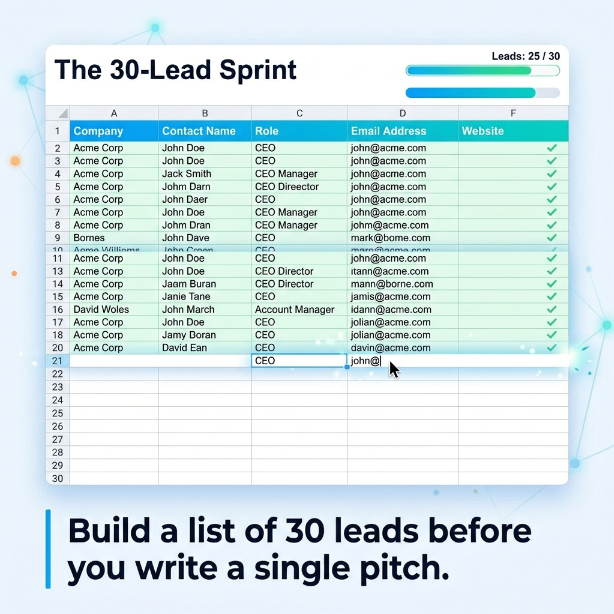
Task: build a list of 30 leads before you write a single pitch. Pull 6 from each channel above. Don’t skip this step to start pitching faster. A list of 30 gives you enough volume that 1 rejection doesn’t feel like the end of your freelance career.
How much should you charge to get your first client?
Guessing usually means undercharging.
A 2026 survey of 213 freelance copywriters by Peak Freelance found the most common price for a 1,500-word blog post sits between $250 and $399, chosen by 27% of respondents.
Only 8% charge $1,000 or more per post.
Among copywriters earning 6 figures a year, half charge at least $1,000 per post, and a quarter charge over $1,500 for a 1,500-word article.
Experience raises your ceiling. It doesn’t set your floor.
Per-word benchmarks for 2026, by tier:
| Tier | Per-word rate | 1,000-word article |
|---|---|---|
| Beginner (0-2 years) | $0.05-$0.15 | $50-$150 |
| Intermediate (2-4 years) | $0.15-$0.30 | $150-$300 |
| Advanced (3+ years, niche) | $0.30-$0.60 | $300-$600 |
| Expert (5-10 years, technical/finance/health) | $0.60-$1.50+ | $600-$1,500+ |
US freelance copywriters average $53 an hour. On Upwork specifically, beginners charge around $20 an hour, intermediate copywriters $41, and expert copywriters $85.
Retainers are where the real income shows up. A content partnership with a mid-sized business runs $500 to $3,000 or more a month, depending on volume and strategy involved.
Here’s the pricing structure for your first client, anchored to these numbers.
Month 1:
Price at $300 for a 1,500-word post (precisely estimated numbers). This sits inside the most common market band and reads as fair, not desperate. Frame it as an introductory rate tied to a 3-month trial period, not a permanent discount.
Month 2:
Raise to $400. You’ve delivered proof. The client has seen your research, your structure, your turnaround time.
Month 3:
Raise to $500-$600 and propose a retainer: 2-4 posts a month at this rate, or a flat monthly fee if the scope includes strategy work like keyword research or content calendars.
As your client workload grows, workflow automation can help manage recurring tasks like follow-ups, content planning, and project handoffs more efficiently.
This keeps you inside the top third of what freelance copywriters report charging by month 3, without asking a brand-new client to pay expert rates on day 1.
How to get your first client as freelancer: build an offer that sells itself
Avoid writing a bio: “I’m a content writer, I do blog posts and SEO, here’s my rate.” Clients skim past this because it says nothing about them.
Build the offer around 3 questions instead.
What are they not doing?
This is the gap your service fills: a blog that’s gone quiet, product pages with no SEO structure, an onboarding email sequence that doesn’t exist yet.
Why aren’t they doing it?
Usually time, not awareness. Most marketing teams know they need content. They don’t have the hours to produce it consistently.
Many growing companies also need a repeatable content production system instead of publishing one article at a time.
Why should they be doing it now?
Tie this to something concrete: a competitor ranking for their target keywords, a launch date 6 weeks out, a sales team asking for content to send prospects.
Your offer states 4 things clearly:
- who you help,
- the specific result you get them,
- the timeframe, and
- the next step.
Example: “I write SEO comparison content for SaaS companies losing organic traffic to competitors with thinner, faster-published posts. In the last project, a 13-tool comparison piece for an ecommerce automation brand moved from unranked to page 1 for its target keyword in 11 weeks.
I can start on your next post this week.”
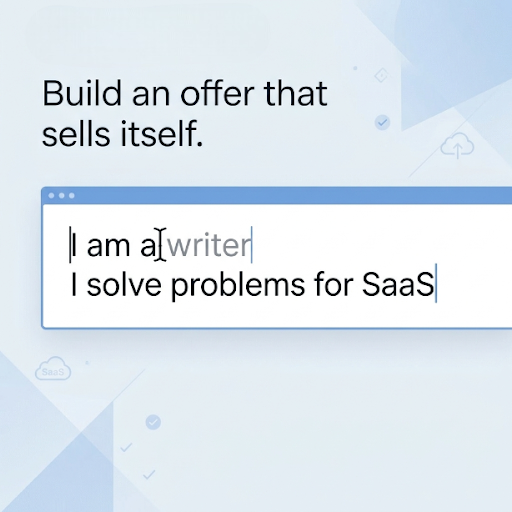
That’s specific. It names a client type, a result, a number, and a timeline.
It doesn’t need fake urgency; the real timeline does the work.
How to get your first client as a freelancer: Pitching and Closing
Send a short, direct message. Structure it in 4 lines.
- Name something specific about their content (a post that’s ranking well, a gap you noticed, a recent launch).
- State what you do in 1 sentence.
- Give 1 concrete result or sample.
- Ask for a specific next step: a 15-minute call, or a trial post at your Month 1 rate.
Don’t pad the message with your full career history. Don’t apologize for reaching out cold.
A client deciding whether to hire you is checking 1 thing: can this person produce good work on time. Everything in your pitch should answer that.
If they say yes, confirm scope, price, and deadline in writing before you start.
This approach to get freelance clients sets the tone for a client relationship built on clear terms, not assumptions.
Last Word
You don’t need a perfect portfolio or a polished rate card to start to get your first client as a freelance copywriter. You need 30 leads, a clear offer, and a price that respects your work.
Send the first pitch this week.
