
Digital nomads don’t just send money abroad. They get paid by overseas clients, hold multiple currencies, pay for everyday expenses, withdraw cash, and occasionally send money to family or contractors. Remitly handles one-way transfers to mobile wallets and cash pickup points. It does not give you a multi-currency account, a debit card, or local bank details to receive client payments. Digital nomads need all three. That’s why Revolut vs Wise is a different comparison than Remitly vs Wise or Remitly vs Revolut.
If your goal is finding the best Remitly alternative for digital nomads, the answer depends on how you use your money every day.
This blog compares fees, exchange rates, cards, client payments, ATM withdrawals, security, and everyday use so you can decide whether Wise vs Revolut or both belong in your digital nomad banking stack.
Rates and fees change regularly. Always check the live quote inside the app before sending money.
What Digital Nomads Actually Need
A freelancer in Thailand may invoice a US client in dollars, receive a payment from Germany in euros, pay rent in Thai baht, then send money home a few days later.
That requires more than a remittance app.
Most long-term travelers look for:
- Local bank details for receiving USD, EUR, or GBP payments
- Multi-currency accounts that let them keep money without forced conversion
- Low exchange costs when moving between currencies
- Debit cards with competitive foreign spending rates
- Budgeting tools that work across several currencies
- Occasional international transfers without excessive fees
So, Revolut vs Wise debate is about the coverage of these needs. Both prioritize different parts of the experience.
This matters whether your income comes from freelance clients, remote jobs, or content creation – the banking setup underneath stays the same.
- Wise focuses on predictable exchange rates and international payments.
- Revolut packs banking, spending, investing, budgeting, and travel features into one app.
Revolut vs Wise: Comparison at a Glance
If you’re choosing the best Remitly alternative for digital nomads, don’t compare transfer fees alone. Look at how each platform fits into your daily routine. Here’s a side-by-side Remitly vs Revolut vs Wise comparison.
| Feature | Wise | Revolut | Remitly |
|---|---|---|---|
| Primary Purpose | Multi-currency account + transfers | All-in-one financial super app | Remittance service only |
| Monthly Fee | $0 | $0–$45 (tiered) | $0 |
| Exchange Rate | True mid-market, 0% markup | Proprietary rate (small markup) | Markup embedded (0.4%–3%) |
| Currencies Held | 50+ | 25+ | None (send-only) |
| Local Bank Details | 10+ countries (USD, EUR, GBP, etc.) | EUR IBAN (EU users), limited others | None |
| Debit Card | Yes ($9 one-time) | Yes (free Standard card) | No |
| ATM Free Limit | ~$250/month | $200–$800/month (plan dependent) | N/A |
| Weekend FX Markup | No | 1% (Standard), 0% (Premium+) | N/A |
| Transfer Fee | 0.33%–0.6% + small fixed | 0.3% or flat £3–£5 (plan discounts) | $0–$15 (varies by speed) |
| Transfer Speed | 64% under 20 seconds | Instant (Revolut-to-Revolut), 1–5 days SWIFT | Express: minutes; Economy: 3–5 days |
| Cash Pickup | No | No | Yes (500K+ agents) |
| Mobile Wallets | Limited | No | Yes (M-Pesa, GCash, RappiPay) |
| Investment Options | No | Stocks, ETFs, crypto, commodities | No |
| Travel Insurance | No | Yes (Premium+) | No |
| Best For | Receiving income, large transfers, holding currencies | Daily spending, budgeting, EU nomads | Emergency cash, unbanked recipients |
For most remote workers, Revolut vs Wise comes down to priorities.
Wise usually wins for receiving payments and moving larger amounts internationally.
Revolut packs more everyday financial features into one international remittance app.
Revolut vs Wise Fees and Exchange Rates: Which Costs Less in 2026?
Wise and Revolut price international transfers differently. Remitly uses another model altogether.
Looking at the total cost, including exchange rates, transfer fees, and plan restrictions, gives a much clearer picture of the cheapest way to send money internationally.
Revolut vs Wise Exchange Rates. Wise Uses the Mid-Market Rate With Transparent Fees
Wise keeps its pricing simple. Every transfer uses the mid-market exchange rate, the same rate shown on Google or XE, then adds a clearly displayed transfer fee. For most popular currency corridors, fees typically start around 0.33% to 0.6%, although they vary by payment method, currency pair, and transfer amount.
Before you confirm a transfer, Wise shows:
- The transfer fee
- The exchange rate
- The exact amount your recipient will receive
That pricing model makes budgeting much easier for freelancers and digital nomads receiving client payments every month. You always know what you’re paying, and you don’t need to calculate an exchange-rate spread yourself.
Wise also stays consistent regardless of the day. There are no weekend currency conversion surcharges, monthly exchange limits, or subscription requirements to access its best exchange rate.
Revolut vs Wise Fees. Revolut’s Exchange Rate, Weekend Markups, and Plan Limits Explained
Revolut prices currency exchange differently.
During weekdays, Standard users can exchange up to $1,000 per month at Revolut’s standard exchange rate. Premium and Metal subscribers receive much higher or unlimited allowances depending on their plan.
Weekend conversions also cost more on lower-tier plans because currency markets are closed.
Current weekend markups are:
- Standard: 1%
- Plus: 0.5%
- Premium, Metal and Ultra: No weekend markup
For major currencies such as USD, EUR and GBP, Revolut remains competitive. Less common currencies can carry a wider exchange spread than Wise, so checking the live quote before confirming a transfer is always worth doing.
Remitly vs Wise Hidden Fees. Why “$0 Transfer Fees” Don’t Always Mean Lower Costs
Remitly frequently advertises low-cost or even $0 Economy transfers. The transfer fee alone doesn’t tell the full story.
Economy transfers usually use an exchange rate that includes a margin above the mid-market rate. Express transfers often deliver money faster, though the exchange rate may become even less favorable depending on the transfer corridor.
For occasional remittances, the difference may be small.
For digital nomads sending client income every month, even a 1% difference in the exchange rate becomes expensive over time.
That’s why experienced travelers compare the total amount received, not simply the advertised transfer fee.
Revolut vs Wise Cost Comparison. Sending $1,000 to India
The example below shows why exchange rates matter more than marketing headlines. Actual amounts change throughout the day, but the pricing pattern stays consistent.
| Service | Advertised Fee | Exchange Rate | Hidden Markup | Real Total Cost |
|---|---|---|---|---|
| Wise | ~$15 | Mid-market | $0 | ~$15 |
| Remitly Economy | $0 | Below mid-market | ~$35–$42 | ~$35–$42 |
| Remitly Express | $3.99 | Further below mid-market | ~$95–$105 | ~$101–$109 |
| Revolut Standard | ~$0.30–$5 | Slight markup | Variable | ~$5–$20 |
For transfers to India, the Philippines, and Thailand, Wise regularly delivers more local currency because it uses the mid-market rate.
Revolut remains competitive for many major currency pairs, especially if you exchange during weekdays and stay within your plan limits.
Remitly still makes sense when your recipient needs cash pickup or mobile wallet delivery, where Wise and Revolut have limited support.
Revolut vs Wise for Receiving Client Payments: Which Works Better for Digital Nomads?
Receiving money is part of everyday life for freelancers, consultants, agency owners, and remote employees. If clients can’t pay you through a local bank transfer, you’ll often lose money to wire fees, slower settlements, or unnecessary currency conversions.
This is where Revolut vs Wise becomes more than a transfer comparison.
Wise Gives You Local Bank Details in Multiple Countries
Wise Account gives eligible customers local account details for several major currencies, allowing clients to pay you as if you had a domestic bank account.
Depending on your location and eligibility, you can receive payments using:
- USD account and ACH routing number
- EUR IBAN
- GBP account number and sort code
- AUD BSB
- CAD account details
- SGD account details
- HUF, RON, TRY, and NZD account details
This setup removes unnecessary international wire fees for many clients.
Example:
A US client can send an ACH payment directly to your USD account details. A UK client can pay your GBP account using Faster Payments, while a European client can transfer euros through SEPA.
The money stays in your Wise account until you decide whether to convert it, spend it, or send it elsewhere.
For freelancers who invoice clients in different countries every month, this flexibility is one of Wise’s biggest advantages.
Revolut’s Local Account Details Depend on Your Region
Revolut also supports receiving bank transfers, although availability depends on where your account is registered.
European users generally receive a personal EUR IBAN for SEPA transfers. UK customers receive local GBP account details, while supported markets such as the US also receive domestic account information.
🡪 If most of your income comes from overseas clients, Wise usually gives you more flexibility across multiple currencies.
🡪 Revolut works well when your clients already use bank transfers supported within your region.
Why This Matters for Freelancers and Remote Workers
Getting paid shouldn’t require every client to send an international wire.
Local account details reduce banking fees, shorten payment times, and make invoicing much simpler.
For example:
- A US client pays your USD account through ACH.
- A German client sends euros through SEPA.
- A UK client pays using Faster Payments.
Each payment arrives as a domestic transfer, avoiding many of the charges associated with international bank wires.
That’s one reason many freelancers build their digital nomad banking stack around Wise, then use Revolut for spending, budgeting, and travel.
Revolut vs Wise for Daily Spending and ATM Withdrawals Abroad
Both Wise and Revolut issue debit cards designed for international spending, but their withdrawal limits and currency conversion rules differ.
Wise Card: Around $250 in Free ATM Withdrawals Each Month
The Wise card automatically spends from your available balance in the correct currency. If you don’t hold that currency, Wise converts your money using the mid-market exchange rate before completing the purchase.
Eligible customers can usually withdraw up to the equivalent of about $250 per month without additional Wise withdrawal fees. After that, Wise charges a small fixed fee plus a percentage of the withdrawal amount.
Local ATM operators may still apply their own surcharge, regardless of which card you use.
Wise works well for people who mainly pay by card and only withdraw cash occasionally.
Revolut Card: Higher Free ATM Limits on Paid Plans
Revolut increases free ATM withdrawals as your subscription plan increases. Current monthly limits are approximately:
| Plan | Free ATM Allowance |
|---|---|
| Standard | About $200 |
| Plus | About $200 |
| Premium | About $400 |
| Metal | About $800 |
| Ultra | Around $2,000 |
After reaching the monthly allowance, Revolut generally charges a 2% withdrawal fee, subject to minimum charges where applicable.
For frequent travelers who regularly use ATMs, Premium and Metal plans can offset their monthly subscription cost through the larger withdrawal allowance alone.
The Weekend Currency Exchange Trap
One cost many first-time users overlook is Revolut’s weekend currency surcharge.
Because foreign exchange markets close over the weekend, Revolut adds an extra margin on lower-tier plans to reduce exchange-rate risk.
Current weekend fees are:
- Standard: 1%
- Plus: 0.5%
- Premium: 0%
- Metal: 0%
- Ultra: 0%
Wise doesn’t increase its exchange rate because it’s the weekend. You pay the same pricing structure regardless of the day you convert your money.
If you rely on Revolut, exchanging larger amounts before the weekend can help you avoid unnecessary currency conversion costs.
Revolut vs Wise Transfer Speed: Which Sends Money Faster Worldwide?
All three services, Wise, Revolut, and Remitly, can complete transfers quickly under the right conditions. The actual delivery time depends on the destination country, payment method, banking hours, and whether the transfer stays within the same financial network.
Wise Transfer Speed. Most Transfers Arrive in Seconds
Wise continues to rank among the fastest cross-border payment platforms.
According to Wise, around 64% of transfers arrive in under 20 seconds, while the vast majority reach recipients within 24 hours. Transfers involving less common currencies or local banking systems may take 1 to 2 business days.
Before you send money, Wise estimates the delivery time based on the destination, payment method, and banking schedule.
Common transfer times include:
- Major currency pairs: Seconds to a few hours
- USD, GBP and EUR transfers: Usually same day
- Less common currency corridors: 1 to 2 business days
For freelancers waiting on invoices or businesses paying overseas contractors, that level of predictability makes planning much easier.
Revolut Transfer Speed. Instant Between Users, Longer Through SWIFT
Revolut transfers follow two different paths.
Transfers between Revolut users are usually instant, regardless of country. Both users simply need active Revolut accounts.
Transfers sent through traditional banking networks take longer.
Typical delivery times are:
- Revolut to Revolut: Instant
- Local bank transfers: Usually same day or next business day
- International SWIFT payments: Around 1 to 5 business days, depending on intermediary banks and destination country
If the recipient doesn’t use Revolut, Wise generally provides more accurate delivery estimates before you confirm the transfer.
Remitly Transfer Speed. Express or Economy
Remitly focuses on fast remittances and gives customers two delivery options.
Express transfers usually arrive within minutes when paid by debit card or credit card and sent to supported destinations.
Economy transfers generally take 3 to 5 business days, depending on the receiving country and payment method.
This flexibility makes Remitly attractive for emergency transfers, especially when recipients need:
- Cash pickup
- Mobile wallet delivery
- Immediate access to funds
When speed alone matters, Remitly Express remains one of the fastest options available.
Revolut vs Wise Pricing: Which Plan Gives Better Value for Digital Nomads?
One of the biggest differences in the Revolut vs Wise comparison is how each company charges for its services.
Wise Pricing. No Monthly Subscription
Wise doesn’t charge a monthly account fee. You simply pay when you use the service.
Typical costs include:
- Currency conversion fee based on the currencies involved
- International transfer fee shown before confirmation
- One-time fee for the Wise debit card in supported countries
This pricing works well for freelancers, remote workers, and business owners whose income changes from month to month.
Revolut Pricing Plans
Revolut gives users five personal plans.
| Plan | Monthly Price | Fee-Free Exchange | Free ATM Limit |
|---|---|---|---|
| Standard | Free | Up to $1,000/month | Around $200 |
| Plus | $3.99 | Up to $3,000/month | Around $200 |
| Premium | $9.99 | Unlimited | Around $400 |
| Metal | $16.99 | Unlimited | Around $800 |
| Ultra | $45 | Unlimited | Around $2,000 |
Paid plans also include benefits such as:
- Higher ATM withdrawal limits
- Lower international transfer fees
- Airport lounge access on eligible plans
- Travel insurance
- Purchase protection
- Investment features
- Cashback in selected markets
Not every feature is available in every country, so it’s worth checking your local pricing page before upgrading.
Revolut vs Wise Security: Which Is Safer for International Banking?
Both Wise and Revolut operate under financial regulations in multiple countries, although they don’t hold the same banking status everywhere.
Wise Regulation and Account Protection
Wise is regulated by financial authorities in the countries where it operates. These include the UK Financial Conduct Authority (FCA) and FinCEN in the United States.
Wise safeguards customer funds, but it is not a bank in most markets, so balances generally are not covered by FDIC insurance in the United States or the UK’s Financial Services Compensation Scheme.
Revolut Regulation and Banking Licenses
Within the European Economic Area, Revolut operates through a full banking license issued by the Bank of Lithuania, giving eligible deposits protection of up to €100,000 under the Lithuanian deposit guarantee scheme.
In the UK, Revolut operates as an Electronic Money Institution (EMI) authorized by the FCA.
For US customers, banking services are provided through FDIC-insured partner banks rather than directly by Revolut Bank.
P.S. The protection you receive depends on the country where your account is registered.
Why Every Digital Nomad Needs a Backup Account
Wise, Revolut, PayPal, and traditional banks may temporarily restrict access while verifying identity documents, the source of funds, or unusual account activity.
If your only account is under review while you’re traveling overseas, paying rent or booking accommodation becomes much harder.
Many experienced travelers keep at least two financial accounts active.
A common setup is:
- Wise for receiving client payments and international transfers
- Revolut for everyday spending
- A traditional bank or another fintech account as an emergency backup
Revolut vs Wise: What Digital Nomads Actually Say
The consensus across Reddit, Nomad List, and Facebook groups is to use both services. Wise handles income reception and large transfers. Revolut handles daily spending and European SEPA integration. US citizens often add a Charles Schwab checking account for unlimited ATM fee rebates.
On June 26, 2026, we checked live rates for a $1,000 USD to INR transfer. Wise quoted a fee of $14.72 at the mid-market rate.
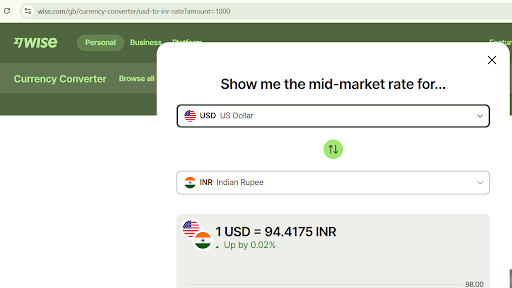
Revolut Standard quoted no upfront fee but applied an exchange rate approximately 0.4% below mid-market, making the real cost around $4.00.
Last Word on Revolut vs Wise. Which is a Better Remitly Alternative For Digital Nomads?
Choose Wise If…
Choose Wise if you receive freelance payments, make large international transfers, or want the cheapest way to send money internationally. Its mid-market exchange rate, transparent fees, and local bank details make it the stronger choice for remote workers.
Choose Revolut If…
Choose Revolut if you want an all-in-one finance app with budgeting tools, investments, travel perks, and low-cost everyday spending, especially across Europe.
Use Wise + Revolut Together
For most digital nomads, the best answer isn’t Revolut vs Wise. It’s Wise + Revolut. Use Wise for receiving income and larger transfers, then use Revolut for daily spending, budgeting, and travel. This combination gives you the most flexibility while keeping costs low.
