Claude Academy is Anthropic’s new learning platform. It launched on August 21, 2026. The courses are free. Anyone can use them.
Anthropic built this AI LMS platform because people kept asking how to use Claude better. Some users are new to AI. Others use Claude daily. Claude Academy has paths for both.
The platform includes videos, screenshots, and text. Everything is in one place. You don’t need to hunt through blog posts or YouTube.
The URL is academy.claude.com. Anthropic announced Clause Academy on X at 12:17 AM on August 21. The post got 2.4 million views in hours.
How You Can Access Claude Academy
You don’t need much to start. A web browser works fine.
Go to www.academy.claude.com/. The sign-up is simple. You might need a Claude account, but Anthropic hasn’t locked it behind a paywall.
The courses load in your browser. There’s no app yet. The design is clean. You can see your progress as you move through lessons.
If you’ve used Skilljar for Claude training before, this is different.
Claude Academy is official. It’s built by the same team that built Claude. The content is direct from the source.
Claude Academy vs. Skilljar: What’s the Difference?
Skilljar hosts third-party Claude courses. Some are good. Some cost money. Claude Academy is different.
Claude Academy is official. Anthropic built it. The team that makes Claude also made the lessons. That matters because they know the tool inside out.
Skilljar courses vary in quality. Some teach outdated features. Others focus on tricks that don’t work anymore. Claude Academy stays current. Anthropic updates it as Claude changes.
Price is the big one. Skilljar courses often charge $50 to $200. Claude Academy costs nothing. The announcement said it clearly: “free and open to anyone.”
If you started Skilljar recently, finish what you paid for. But check Claude Academy too. It might cover the same ground faster. And it’s free.
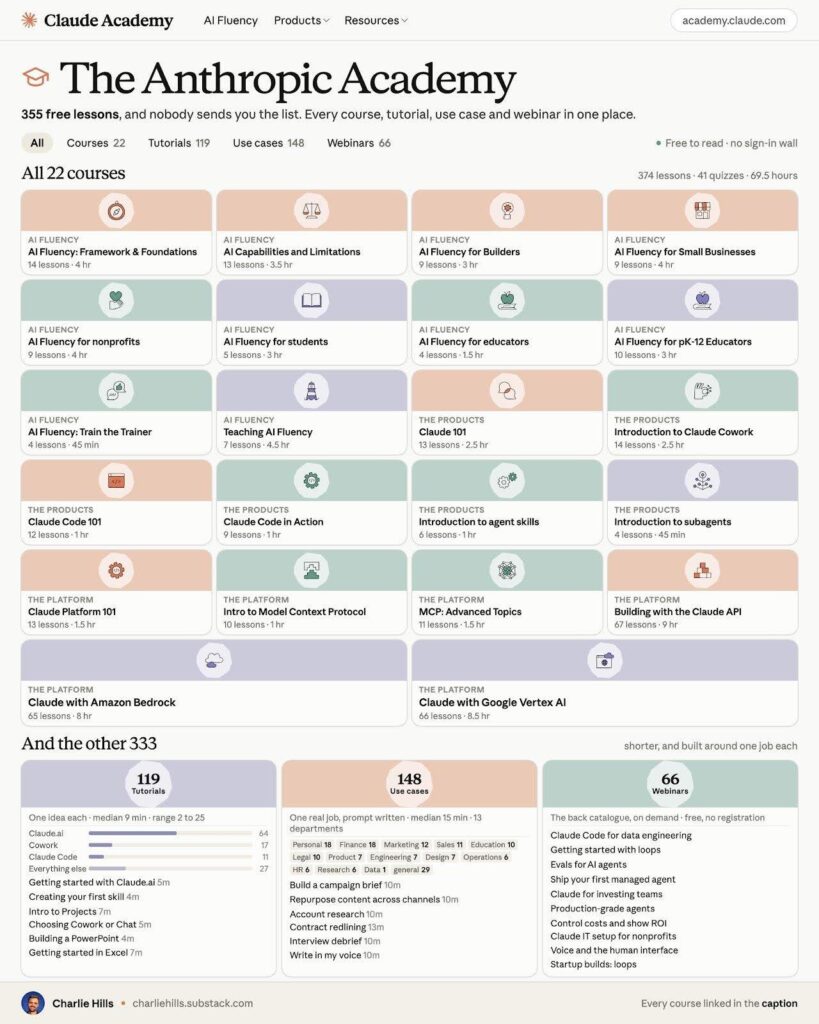
What Courses Are Available on Claude Academy?
The platform has two main tracks.
- For beginners: “What is AI?” and “How does Claude work?” These start from zero. No prior knowledge needed.
- For daily users: Advanced prompting, workflow automation, and integration guides. These assume you already know the basics.
Each course mixes formats. You get short videos, annotated screenshots, and plain text explanations. Anthropic calls this “neatly compiled.”
You can learn how you prefer.
Watch a video. Or skim the text. Your choice.
The beginner track is short. You can finish it in an afternoon. The advanced track goes deeper. Some sections take a few hours.
Anthropic says they’ll add more over time. The launch library is solid but not huge. Expect growth in AI courses future.
What Will You Learn at Claude Academy?
Most AI courses teach buttons. Click here. Type this. Claude Academy asks a harder question: are we teaching people to use AI, or to think with it?
The difference matters. Using AI means following recipes. Thinking with AI means knowing when the recipe is wrong.
Anthropic’s blog post on their teaching approach spells this out. They don’t want users who memorize prompts.
They want users who understand why a prompt works. That way, when Claude updates or the task changes, the user adapts.
Claude Academy builds this in two ways:
- Practical skills: How to write prompts that get useful answers. How to fact-check Claude’s output. How to spot when the model is guessing.
- Mental models: What AI can and can’t do. Where it helps. Where it wastes your time. When to trust it. When to ignore it.
This second part is rare. Most courses skip it. They show you the shiny features. Claude Academy shows you the limits too. That’s honest. And it’s useful.
If you finish the courses, you won’t just know Claude better. You’ll know when to use Claude. That’s a harder skill. And it’s worth more.
Why Claude Academy Matters for AI Education
AI education has a paywall problem. Claude Academy breaks that pattern. It’s free and official without being corporate.
Here’s what changed:
- Before: You paid $100+ for a Claude course on Udemy or Skilljar. The instructor might not have used Claude in months. The examples were old. You learned workarounds that no longer worked.
- Now: Anthropic runs the classroom. The lessons match the current Claude build. When features change, the course changes with them. No extra cost. No stale content.
Small businesses, students, and people in countries with weak currencies can now get the same training as well-funded teams. Knowledge was never this open for a major AI tool.
Remember! Anthropic isn’t selling certificates. There’s no “Claude Academy graduate” badge to flaunt on LinkedIn.
The value is in what you learn, not what you display. That says something about their priorities.
Claude Academy vs. Other AI Learning Platforms
Most AI companies have learning resources. Few have built something this complete.
OpenAI has docs and a few guides. They’re technical. Good for developers. Less useful if you just want to write better prompts or plan projects with ChatGPT.
Google offers AI training through Cloud Skills Boost. It’s solid but tied to Google products. You learn Gemini and Vertex AI. You don’t learn Claude.
Coursera and edX have AI courses from universities. They’re broad. You learn how AI works in theory. You don’t learn how to use Claude on Tuesday morning to finish a report.
YouTube has Claude tutorials. Some are great. Most are rushed. The good ones are buried under clickbait. And none of them update when Claude changes. You watch a 2025 video. You try the trick. It doesn’t work anymore. No one tells you why.
Claude Academy sits in a different spot. It’s product-specific like YouTube tutorials. But it’s maintained like official docs. And it’s free like YouTube, without the noise.
Who Should Use Claude Academy?
Three groups benefit most.
Beginners:
You heard about AI. You want to try Claude. You don’t know where to start.
Claude Academy starts from zero. No assumptions. No jargon without explanation.
Daily users:
You use Claude already. But you feel like you’re missing something. Maybe your prompts are too long. Maybe you accept bad answers. The advanced track shows tighter methods. You save time.
Teams and managers:
You want your group to use Claude well. Not just individually, but together. Claude Academy gives you a shared baseline regardless of any Claude version.
Who’s it not for?
Hardcore AI researchers. If you’re training models or writing papers, you already know this. Claude Academy is for users, not builders.
One honest note: if you’re a prompt engineer by trade, some of this will feel basic. But the “thinking with AI” sections might still surprise you. Most pros never studied that part formally.
Claude Academy Reviews and Early Reactions
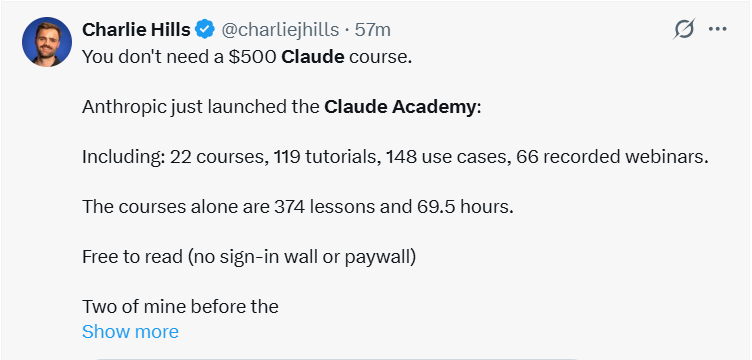
The announcement hit 2.4 million views in hours. For an AI education launch, it’s massive.
The comments broke into three camps.
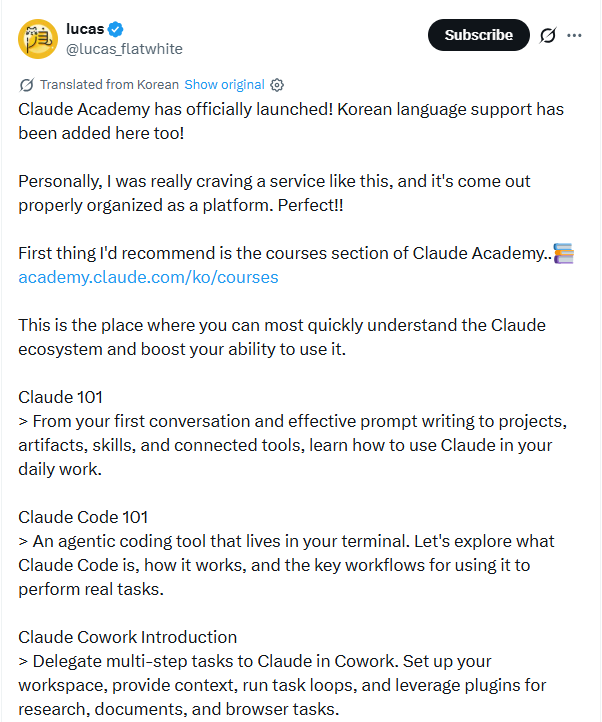
Language support:
The skeptical:
The curious:
How to Get the Most Out of Claude Academy
Don’t just click through. That wastes your time and Anthropic’s effort.
- Start with the right track. If you use Claude daily, skip the beginner section. You already know what a large language model is. Go straight to advanced prompting. The self-assessment at the start helps. Use it.
- Do the exercises, not just the reading. Claude Academy includes practice prompts. Type them. Don’t just watch the video. Muscle memory matters. Your fingers learn faster than your eyes.
- Take notes on what fails. When a prompt doesn’t work, screenshot it. Write why. Claude Academy teaches you to debug your own requests. That skill transfers to every AI tool, not just Claude.
- Revisit after Claude updates. Anthropic adds features regularly. The courses will update too. Check back every few months. A section that was basic before might now cover a new capability you missed.
- Use it with your team. Go through the same module together. Compare answers. You’ll spot gaps in how each person uses Claude. Fix them early.
One last tip: don’t treat it like a credential. There’s no certificate. The point is to work better with Claude, not to post about it.
Final Thoughts: Is Claude Academy Worth It?
If you use Claude, yes. If you’re curious about AI, yes. If you paid for a Claude course in the last six months, maybe check it anyway. You might learn something your paid course missed.
Claude Academy isn’t perfect. The library is small now. There’s no mobile app. No certificates. No offline mode. Anthropic could have charged for this. They didn’t. That choice says something about how they want users to engage with Claude. Not as consumers of a product. As people who understand the tool they use.
The real test is six months from now. Will Claude Academy stay updated? Will the library grow? Will it still be free? For now, the launch is solid. The promise is clear. And the price is right.
FAQs About Claude Academy
Q#1. Will Claude Academy add more courses?
Yes. Anthropic said the launch library is just the start. New modules will come as Claude evolves. Expect updates tied to major feature releases.
Q#2. Can you download Claude Academy videos?
Not currently. Everything streams in the browser. You’ll need an internet connection to use it.
Q#3. Is there a Claude Academy mobile app?
No app yet. The site works on mobile browsers. It’s responsive. But it’s built for desktop learning first.
Q#4. How is Claude Academy different from the Claude blog?
The blog announces features and shares research. Claude Academy teaches you how to use them. One is news. The other is school.
Q#5. Do you need a paid Claude subscription?
No. The courses are free. You might need a free Claude account to sign in. But Anthropic hasn’t put Claude Academy behind a paywall.
Q#6. What languages does Claude Academy support?
English at launch. More languages are likely. Anthropic hasn’t announced a timeline.
Q#7. Can businesses use Claude Academy for team training?
Yes. It’s free and open to anyone. Companies can point employees to specific modules. No licensing needed.
