
Marketing is one of the biggest challenges for first-time founders. You’re already spending time building your product, improving features, fixing bugs, and trying to understand what customers want. Adding marketing to that workload can quickly become overwhelming.
Hiring marketers, purchasing expensive software, and running paid campaigns aren’t always realistic options for an early-stage business.
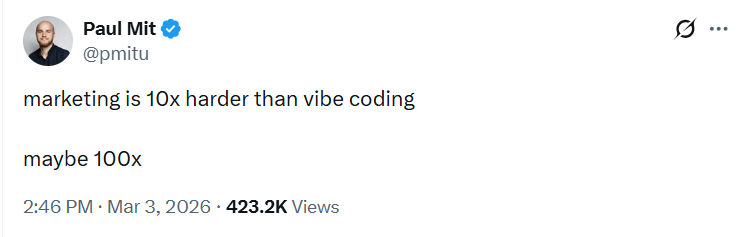
But you don’t need a big marketing budget to start attracting customers.
This guide covers eight practical ways to use Claude AI for $0 marketing. Each strategy includes actionable steps and ready-to-use prompts you can adapt to your business.
1. Market Research: Understand Your Competitors and Ideal Customers
Launching a product without understanding your market is one of the most expensive mistakes a founder can make.
The solution isn’t necessarily more development. It’s better research before investing your time and resources.
Claude AI can help you organize your initial market research and identify opportunities worth exploring.
Start with three important activities:
Identify your competitors.
Ask Claude to identify five to ten businesses offering products or services similar to yours. Request their official websites, social media profiles, main offerings, and positioning.
Build your ideal customer profile (ICP).
Describe your industry and product. Ask Claude to develop two or three customer personas that represent the people most likely to purchase your solution.
Include information such as:
- Job titles and professional backgrounds.
- Company size and industry.
- Business objectives.
- Purchasing motivations.
- Problems they’re actively trying to solve.
Discover customer pain points.
Understanding customer frustrations is more valuable than simply listing product features. Find out what prevents your audience from achieving its goals and where existing solutions fall short.
For example, imagine you’re developing an AI marketing platform for early-stage SaaS companies.
Your potential customers might struggle with customer acquisition, limited marketing resources, inconsistent lead generation, and a lack of SEO expertise.
These insights can shape your marketing messages around actual customer problems.
Copy-and-paste Claude prompt for market research
Act as an experienced market research analyst.
I’m developing an AI marketing platform for early-stage SaaS companies that want to acquire their first 1,000 users.
Research the five most important problems these companies encounter when trying to attract their first customers.
Use available customer feedback, including G2 and Capterra reviews, Reddit discussions, competitor FAQ pages, relevant industry publications, and other credible sources.
For each problem, provide:
- Pain point: Describe the problem clearly.
- Explanation: Explain why this issue matters to early-stage SaaS companies.
- Customer evidence: Include a relevant customer experience, example, or short quotation.
- Source: Provide a direct link to the original discussion, review, or publication.
Prioritize problems that affect purchasing decisions or prevent companies from achieving their marketing goals.
Do not fabricate customer quotations, statistics, or sources. Clearly distinguish verified findings from assumptions.
Present the results in an organized table.
Turn research findings into marketing content
Once you’ve identified your audience’s problems, reuse those findings across different marketing channels:
- Landing page copy that explains how your product solves specific problems.
- Personalized cold emails that address relevant business challenges.
- Social media content built around customer questions.
- Newsletter topics that educate potential customers.
- Advertising concepts based on customer frustrations.
- Product messaging that communicates benefits instead of simply listing features.
This research gives you a much stronger foundation for AI-powered marketing than writing assumption-led promotional messages.
2. Lead Generation: Find Your First 30 Potential Customers
Finding your target audience is important, but identifying actual decision-makers who might purchase your product is where lead generation becomes useful.
You don’t need thousands of random email addresses. Your priority should be finding a small group of qualified prospects who genuinely match your ideal customer profile.
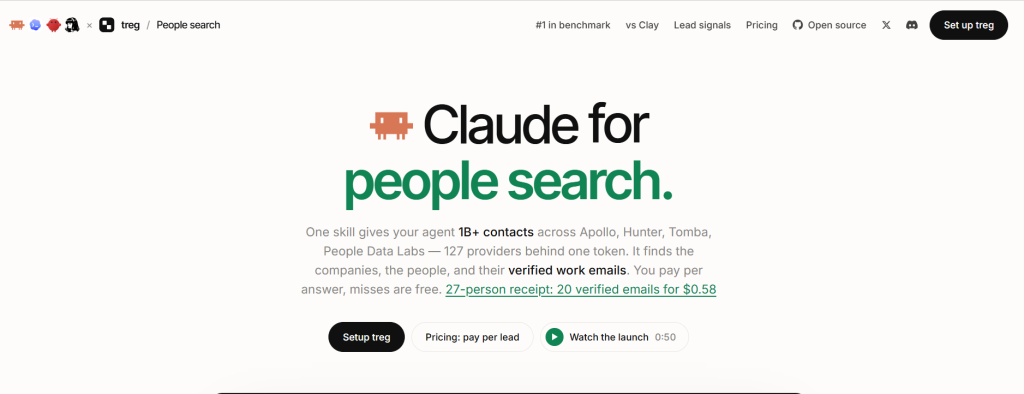
Claude can help automate parts of this process when connected to a prospecting platform such as Treg.

Copy-and-paste Claude prompt for finding leads
I’m developing an AI marketing platform that helps early-stage SaaS founders acquire their first 1,000 users.
Use Treg People Search to identify 30 potential customers who fit the following criteria:
Target audience:
- Founders or CEOs of B2B SaaS companies and AI startups.
- Businesses with 1–20 employees.
- Companies operating in the United States or Europe.
- Preferably businesses that have launched a product recently.
For every potential customer, collect:
- Full name.
- Company name.
- Professional designation.
- Company website.
- Business location.
- Verified professional email address, if available.
- LinkedIn profile.
- Reason they match my ideal customer profile.
- A specific, evidence-backed reason why they might benefit from my product.
Rank prospects according to their relevance and likelihood of having the problem my product solves.
Do not invent contact details or fill missing information with assumptions.
Before accessing paid data, explain the estimated cost. Start with the ten strongest prospects.
Return the findings in a structured table that I can export as CSV.
What should your lead list contain?
A useful prospecting report should include
- the person’s name,
- job title,
- company,
- website,
- location,
- company size,
- verified business email,
- LinkedIn profile, and
- the reason they qualify as a potential customer.
This information gives you enough context to begin meaningful conversations.
Cost consideration:
The original workflow reports a cost of approximately $0.014 per verified prospect. That’s a low prospecting cost, but it isn’t technically free.
3. Cold Outreach: Write Personalized Emails That Get Responses
Once you have a list of potential customers, the next challenge is getting their attention.
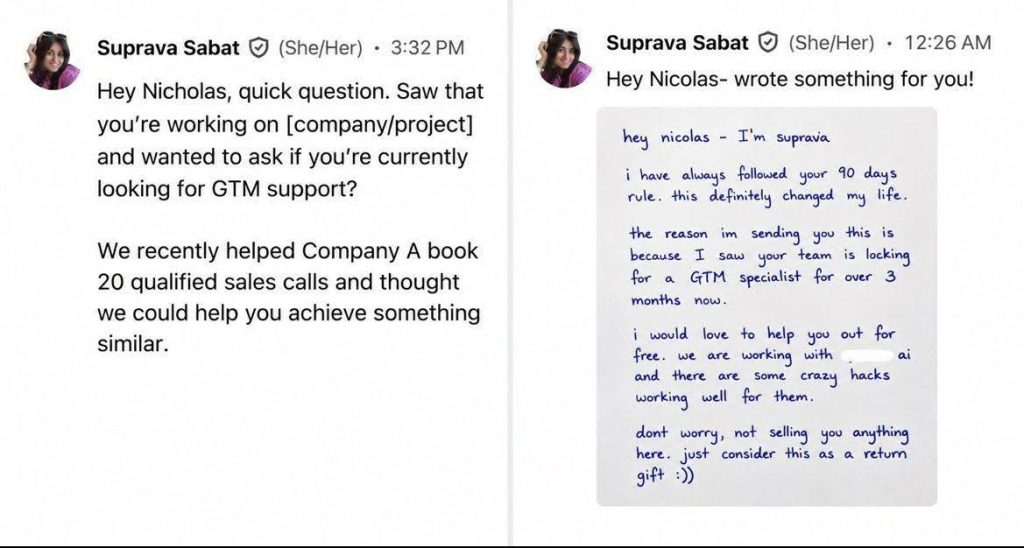
Generic cold emails rarely give prospects a compelling reason to respond. Messages that begin with vague compliments or immediately pitch a product are especially easy to ignore.
Instead, use Claude to research individual prospects and prepare personalized outreach drafts.
Here’s a simple workflow:
- Select the first five to seven prospects from your lead list.
- Ask Claude to examine their company, product, and recent activities.
- Request a short email that references something specific about their business.
- Review and edit the draft to make it sound natural.
- Send the emails individually.
- Monitor responses and identify which introductions generate conversations.
- Test different subject lines and opening messages.
Copy-and-paste Claude prompt for personalized cold emails
Act as an experienced B2B outreach specialist.
Using the prospect information provided, write a personalized introductory email for the first person on my list.
Follow these requirements:
- Writing style: Friendly, informal, concise, and natural.
- Tone: Write like one founder communicating with another.
- Personalization: Reference something specific about the recipient’s company, product, or recent business activity.
- Objective: Establish a genuine professional connection.
- Sales approach: Do not pitch my product or push for a purchase.
- CTA: Do not request a meeting or sales call.
- Length: Keep the message short and easy to read.
Avoid generic introductions, exaggerated compliments, corporate language, and statements that could apply to almost anyone.
Use only information supported by the prospect’s profile or available sources.
Provide one polished email draft with a relevant subject line.
Start with a small outreach campaign
Don’t send hundreds of AI-generated emails immediately.
Start with 5-7 carefully selected prospects. Observe how they respond, refine your opening message, and test different subject lines.
Track:
- Emails delivered.
- Replies received.
- Positive responses.
- Conversations started.
- Prospects interested in learning more.
Your first objective isn’t building a massive email database. It’s discovering whether the right people are interested in what you’re offering.
4. Influencer Marketing: Find 50 Micro-Influencers for Partnerships
Influencer marketing doesn’t have to mean hiring creators with hundreds of thousands of followers.
For a startup with limited resources, micro-influencers can offer a more relevant audience and more accessible partnership opportunities.
- Consider someone with 3,000 followers who regularly discusses SaaS growth, startup marketing, or AI products. Their audience could contain exactly the people you want to reach.
- Compare that with a creator who has 100,000 followers but mostly attracts people outside your target market.
The smaller creator might deliver more qualified attention.
A useful starting point is identifying creators with approximately 2,000–10,000 followers on LinkedIn or X who regularly publish content in your industry.
You can approach potential collaborators with offers that don’t require an upfront sponsorship budget:
- Complimentary access to your product for one year.
- Revenue-sharing arrangements.
- Early access to upcoming features.
- Cross-promotion through your social media accounts.
- Opportunities to participate in product launches or educational content.
Claude and Treg can help you discover potential partners and evaluate their relevance.
How to find relevant micro-influencers for B2B SaaS marketing
- Connect Treg with Claude to access available social profiles and people-search data.
- Explain your product, target audience, and industry.
- Ask Claude to find 50 relevant micro-creators.
- Review their content, audience interests, and recent engagement.
- Rank creators according to audience relevance rather than follower count alone.
- Develop a specific collaboration proposal for each shortlisted creator.
Copy-and-paste Claude prompt for influencer research
I’m developing an AI marketing platform that helps early-stage SaaS founders acquire their first 1,000 users.
Use Treg to identify 50 micro-influencers who could introduce my product to relevant audiences.
Ideal creator profile:
- Between 2,000 and 10,000 LinkedIn followers.
- Regularly publishes content about SaaS, startups, AI tools, indie hacking, product launches, or business growth.
- Creates content primarily in English.
- Has an audience interested in entrepreneurship, software development, marketing, or building digital products.
- Has published at least one piece of content within the past 30 days.
For every potential collaborator, provide:
- Name and LinkedIn profile URL.
- Follower count, where verifiable.
- Main content categories.
- Engagement information from recent posts, where available.
- Public business email or contact method, if available.
- Explanation of why their audience matches my target customers.
- One personalized partnership idea.
Rank all 50 creators using:
- Audience relevance.
- Content quality.
- Recent engagement.
- Potential partnership suitability.
Do not invent follower counts, engagement figures, contact information, or creator profiles.
Include source links, identify missing information, and never assume someone is interested in collaborating.
Return the findings in a CSV-ready table.
Turn creator research into partnerships
After identifying suitable creators, ask Claude to draft an individual collaboration message for each person.
Avoid mass messaging and generic partnership proposals.
Explain why you’ve approached that particular creator and suggest an arrangement that offers value to both sides.
Start conversations first. Build relationships before introducing a commercial proposal.
Some founders skip manual searching and use B2B creator platforms to find partners.
5. Content Inspiration: Study Successful Posts and Create Original Ideas
Coming up with fresh content ideas consistently is difficult, especially when you’re building a personal brand alongside a startup.
But your industry already contains valuable content research material.
Instead of brainstorming every topic from scratch, use Claude to study these conversations and identify patterns worth exploring.
People are discussing business problems, sharing experiences, asking questions, and debating new ideas on platforms such as LinkedIn and Reddit.
The important distinction is that you’re researching successful content, not copying it.
Claude can help you:
- Identify frequently discussed industry topics.
- Discover questions that generate meaningful conversations.
- Understand which customer problems attract attention.
- Examine the tone and structure of successful posts.
- Generate original content angles for your social media accounts.
For example, you could analyze LinkedIn communities focused on SaaS marketing and turn recurring discussions into original posts for Twitter (X).
Copy-and-paste Claude prompt for content inspiration
Act as a social media content researcher and personal branding strategist.
I want to identify popular discussions in relevant LinkedIn communities and use those insights to develop original content for my X account.
Follow these instructions:
Step 1: Research discussions
Review recent posts, discussions, and comments from the LinkedIn communities I provide.
Identify frequently discussed subjects and high-engagement topics.
Where available, consider:
- Number of comments.
- Reactions.
- Shares.
- Recurring questions.
- Audience frustrations.
- Relevance to current industry developments.
Step 2: Identify engagement patterns
For each community, explain:
- The most frequently discussed topics.
- Questions that generate meaningful conversations.
- Common audience problems.
- Content formats and tones that attract engagement.
- Why particular discussions resonate with members.
Step 3: Develop original content
Create one or two original X post drafts inspired by the findings.
Each post should:
- Address a relevant audience problem.
- Reflect a professional, founder-oriented voice.
- Use concise and natural language.
- Present an original perspective.
- Include relevant hashtags only when useful.
Step 4: Present the findings
Organize the results in a table with these columns:
- Community name.
- Top two or three discussion topics.
- Main engagement drivers.
- Original X post drafts.
LinkedIn communities to analyze:
[Insert community names or URLs]
Never reproduce existing posts word for word. Use the research only to identify themes and develop original ideas.
Highlight recurring topics and emerging patterns across different communities.
Expand your research beyond LinkedIn
You can repeat this process with Reddit, niche forums, and other industry-specific communities.
Use Claude to identify patterns across multiple platforms rather than relying on one social network for content inspiration.
For publishing and scheduling, you can also explore tools such as https://typefully.com/.
The goal is to use AI for research and idea generation while keeping your actual content grounded in personal experience.
6. Personal Branding: Turn Your Founder Experience Into 30 Days of Content
One of the biggest weaknesses of AI-generated marketing content is its lack of personality.
Ask an AI tool to write about entrepreneurship, and you’ll often receive the same predictable advice you’ve already seen hundreds of times.
But founders have something AI cannot independently recreate: their actual experiences.
You’ve made decisions, encountered problems, learned from mistakes, spoken with customers, and discovered things while building your business.
Those experiences can become valuable content.
Rather than asking Claude to generate 30 posts without any background information, use it as an interviewer.
Let it ask questions, explore your experiences, and extract useful insights before creating a content calendar.
How to create a month of founder-focused content
- Explain your product, industry, audience, and personal branding objectives.
- Ask Claude to interview you with 20 questions, one at a time.
- Discuss your startup journey, challenges, customer conversations, and business experiments.
- Encourage Claude to ask follow-up questions when your answers reveal interesting details.
- Extract personal stories, practical lessons, and opinions from your responses.
- Turn those insights into a 30-day content calendar for X and LinkedIn.
Copy-and-paste Claude prompt for a 30-day content calendar for B2B SaaS marketing
I’m the founder of an AI marketing platform designed to help early-stage SaaS businesses acquire their first 1,000 users.
I want to develop my personal brand on X and LinkedIn, connect with potential customers, and promote my product through organic content.
Act as an experienced journalist and content marketing strategist.
Your task is to interview me, extract my knowledge, and develop a 30-day social media content plan.
Phase 1: Interview
Ask me 20 questions, one at a time, covering these subjects:
- My journey as a founder and the motivation behind my product.
- Problems I’ve discovered through customer conversations.
- Mistakes I’ve made and lessons I’ve learned.
- My opinions about startups, marketing, and artificial intelligence.
- Interesting experiences from developing my product.
- Marketing experiments and their actual results.
- Unexpected discoveries during product development.
- Practical advice for other founders.
- What differentiates my product and approach.
Avoid generic questions. Challenge my assumptions and ask relevant follow-up questions.
Wait for my response before moving to the next question.
Phase 2: Extract content opportunities
After completing the interview, identify:
- Ten interesting personal stories.
- Ten practical lessons or actionable insights.
- Ten distinctive or thought-provoking opinions.
Prioritize ideas that are specific, useful, authentic, and relevant to early-stage SaaS founders.
Phase 3: Build the content calendar
Create a 30-day publishing calendar for X and LinkedIn.
For every content idea, include:
- Topic and central angle.
- An attention-grabbing opening.
- Three to five main talking points based on my answers.
- Suggested format, such as a short post, personal story, thread, or educational post.
- A natural CTA where appropriate.
Use a conversational, straightforward, founder-focused writing style.
Avoid corporate expressions, generic motivational statements, and recognizable AI-generated writing patterns.
Use my actual experiences and wording wherever possible. Never invent personal stories, business results, statistics, or opinions.
Return the finished calendar in a structured table.
Important: Begin with the first interview question. Do not create the content calendar until the interview is finished.
Why this approach works
You don’t need to manufacture expertise to build a personal brand.
Your existing knowledge and experiences can provide enough material for weeks of useful content.
Claude simply helps you organize those ideas, find their strongest angles, and turn them into content that your audience can understand and apply. Openers matter most on LinkedIn, and a dedicated Claude hook skill can handle them.
7. Community Marketing: Find 50 Online Communities Where Your Customers Spend Time
You could share an excellent product announcement on X and receive only a handful of interactions.
That doesn’t necessarily mean your product is uninteresting. It might simply mean you’re reaching the wrong audience.
Your potential customers are already spending time in online communities, discussing their problems and looking for recommendations.
Depending on your industry, these communities might include:
- Relevant Reddit subreddits.
- Discord servers.
- Private Slack groups.
- Indie Hackers.
- LinkedIn groups.
- Industry-specific discussion forums.
- Startup and developer communities.
Claude can help you research these communities and prioritize the ones that offer the strongest audience fit.
How to identify relevant online communities for SaaS marketing
- Describe your product and ideal customer profile to Claude.
- Ask it to research relevant communities across different platforms.
- Identify approximately 50 communities with active discussions.
- Evaluate their audience, recent activity, and participation rules.
- Rank them according to relevance and potential business value.
- Select the ten strongest opportunities.
- Develop a 30-day community engagement strategy.
Copy-and-paste Claude prompt for community research
I’m developing an AI marketing platform that helps early-stage SaaS founders acquire their first 1,000 users.
I want to discover online communities where potential customers actively discuss problems my product could solve.
Act as an experienced community research and organic distribution strategist.
Phase 1: Identify 50 communities
Research relevant communities across:
- Reddit subreddits.
- Discord servers.
- Slack groups.
- Indie Hackers and founder forums.
- LinkedIn groups.
- Other industry-specific communities.
My preferred audience includes:
- SaaS founders.
- Indie hackers.
- Independent makers.
- Startup operators.
- AI product developers.
Prioritize communities with:
- Active discussions about customer acquisition, marketing, product launches, and business growth.
- Primarily English-speaking members.
- Recent participation and meaningful engagement.
- Opportunities to answer questions and share useful resources.
For each community, collect:
- Community name and direct URL.
- Platform.
- Approximate member count, if available.
- Main topics and audience characteristics.
- Evidence of recent activity.
- Published rules about self-promotion.
- Explanation of its relevance to my product.
- One practical way I can contribute without directly promoting my business.
Phase 2: Rank the communities
Evaluate each community according to:
- Relevance to my ideal customers.
- Activity and discussion quality.
- Opportunities to build credibility.
- Potential to attract qualified website visitors and customers.
Do not invent communities, membership figures, invitation links, or participation rules.
Use current sources and clearly identify information that cannot be verified. Exclude inactive communities.
Phase 3: Develop a 30-day engagement strategy
Select the ten most relevant communities.
For each one, suggest:
- Three useful content topics.
- Three types of discussions I should participate in.
- A natural way to mention my product when relevant and permitted.
- Ways to measure qualified traffic, conversations, and signups.
Focus on contributing useful information rather than promotional activity.
Return the research in a CSV-ready table.
Build relationships instead of spamming communities
Finding 50 communities doesn’t mean you should join all of them and start posting promotional links.
- Start with three to five relevant groups.
- Spend time understanding their discussions, answering questions, and sharing genuinely useful information.
When someone discusses a problem your product solves, you have a natural opportunity to introduce your solution, provided the community’s rules allow it.
Community marketing works best when people recognize you as a useful contributor rather than a free product promoter.
8. SEO: Discover Low-Competition Keywords and Create Pages That Attract Buyers
SEO can become one of the most valuable long-term customer acquisition channels for a startup.
But publishing random blog posts isn’t an SEO strategy.
Many founders choose topics based on competitor content, write several articles, and wait for Google to send traffic.
Months later, they discover that their pages aren’t ranking or attracting the right visitors.
The problem often starts with keyword selection.
You don’t need to begin with an expensive SEO subscription.
Claude, combined with Treg’s available SEO data integrations, can help you research keyword opportunities and organize your content strategy.
Treg can provide access to SEO information from providers such as DataForSEO, SE Ranking, and Serpstat.
Here’s how to approach the process.
Step 1: Research keywords with commercial potential
Describe your product, audience, and competitors.
Ask Claude to identify relevant keywords with measurable search demand, manageable organic competition, and a strong connection to your product.
Don’t focus exclusively on high-volume keywords.
A specific long-tail keyword with fewer monthly searches might attract more qualified visitors than a broad keyword with thousands of searches.
Step 2: Analyze the Google search results
Review the top-ranking pages for your most promising keywords.
Look for:
- Search intent behind each keyword.
- Types of pages currently ranking.
- Topics covered by competing websites.
- Missing information and outdated content.
- Opportunities to create more useful resources.
This helps you understand whether a keyword is realistically worth targeting.
Step 3: Separate blog topics from landing page opportunities
Not every keyword deserves a blog article.
Some searches indicate that users want information. Others suggest they’re comparing products or looking for a solution to purchase.
Organize keywords according to their search intent.
| Search intent | Recommended content |
| Informational | Tutorials, educational articles, and guides |
| Commercial | Product comparisons, reviews, and alternatives |
| Transactional | Product pages, feature pages, and solution landing pages |
For example, someone searching for startup marketing strategies may be looking for educational information.
Someone searching for the best AI marketing tools for SaaS startups may be comparing solutions before making a purchase.
Your content strategy should address both types of searches.
Step 4: Create detailed SEO content briefs
Once you’ve selected your keyword opportunities, ask Claude to prepare content briefs containing:
- Primary and secondary keywords.
- Suggested SEO title and meta description.
- URL slug.
- H1, H2, and H3 structure.
- Main questions to answer.
- Relevant FAQs.
- Internal linking suggestions.
- Conversion-focused CTAs.
- Unique content angles.
These briefs give writers a clear direction and help prevent multiple pages from competing for the same search intent.
Copy-and-paste Claude prompt for SEO keyword research
I’m developing an AI marketing platform that helps early-stage SaaS founders acquire their first 1,000 users.
I want to build an organic search acquisition channel through blog articles and landing pages that attract relevant potential customers.
Act as an experienced SEO researcher and content strategist.
Use Treg to access available keyword research data and Google search results.
Identify realistic keyword opportunities and prepare detailed content briefs.
Phase 1: Keyword research
Find 50 relevant keywords related to:
- SaaS marketing and business growth.
- Acquiring first users and customers.
- AI marketing automation.
- Product launches and distribution.
- Organic marketing strategies for startups.
For each keyword, provide:
- Keyword.
- Monthly Google search volume.
- Keyword difficulty (KD).
- Search intent: informational, commercial, or transactional.
- Main competing websites.
- Relevance to my product.
- Opportunity score based on search demand, ranking difficulty, and business relevance.
Prioritize long-tail keywords with realistic ranking potential, even when their search volumes are relatively small.
Use actual data available through Treg. Never invent search volumes or difficulty scores.
Clearly distinguish organic keyword difficulty from paid advertising competition.
Phase 2: Competitor analysis
Analyze the top ten Google search results for the 15 most promising keywords.
For each keyword:
- Identify the content formats currently ranking.
- Examine the structure of competing pages.
- Review the main topics and questions they cover.
- Identify outdated information and missing details.
- Explain how we could create a more useful resource.
Rank opportunities according to realistic ranking potential and their ability to attract future customers.
Treat SEO difficulty scores as estimates, not ranking guarantees.
Phase 3: Develop the SEO content strategy
Group related keywords into topic clusters to avoid targeting identical search intent with multiple pages.
Recommend which keywords should become:
- Blog articles, including guides, tutorials, comparisons, and checklists.
- Landing pages covering product features, use cases, solutions, and alternatives.
For every recommended page, create a detailed content brief containing:
- Primary keyword.
- Supporting keywords.
- Suggested URL slug.
- SEO title and meta description.
- H1 heading.
- Complete H2 and H3 structure.
- Main questions and talking points for each section.
- Relevant FAQs.
- Internal linking opportunities.
- Conversion-focused CTA.
- A unique angle that makes the page more useful than competing results.
Make each brief detailed enough for a professional writer or AI assistant to develop into a publishable article.
Phase 4: Create a 30-day SEO execution calendar
For every recommended page, include:
- Publishing priority.
- Target keyword cluster.
- Content type.
- Search intent.
- Proposed title.
- Estimated content effort.
- Expected business value.
Before accessing paid Treg services, explain the estimated costs.
Start with keyword research, combine requests where possible, and present the initial shortlist before conducting more expensive search-result analysis.
Return keyword research in a CSV-ready table and content briefs in structured Markdown.
Never fabricate keyword metrics, competitor findings, or ranking guarantees.
Turn keyword research into organic traffic
Once your research is complete, you’ll have the foundation for a practical SEO campaign:
- A list of relevant keyword opportunities.
- Search intent classifications.
- Competitor analysis.
- Prioritized keyword clusters.
- Blog and landing page recommendations.
- Detailed content briefs.
- A publishing schedule.
You can then use Claude to develop initial article drafts from those briefs. Doing this for every page is easier with an AI SEO setup built once.
However, AI-generated content shouldn’t go straight from the chat window to your website.
Add original insights, screenshots, product demonstrations, real customer experiences, and practical examples.
Verify all factual claims before publishing.
More Ways to Use Claude AI for $0 Marketing for B2B SaaS
The eight strategies above cover major areas of startup marketing, but they’re not the only opportunities.
A considerable amount of marketing work involves research, planning, content preparation, and repetitive tasks.
Claude can help with many of these activities without requiring another expensive marketing subscription, provided you have access to the relevant information and tools.
Here are additional ways to put it to work:
| Marketing activity | How Claude can help |
|---|---|
| Content repurposing | Transform existing blog articles into social posts, threads, and newsletter content. |
| Email marketing | Draft a seven-day customer onboarding email sequence. |
| FAQ development | Generate frequently asked questions from customer feedback and common objections. |
| Newsletter planning | Brainstorm relevant newsletter topics and recurring content themes. |
| Influencer outreach | Prepare personalized collaboration proposals. |
| Competitor analysis | Compare competitor positioning, messaging, and product benefits. |
| Testimonial marketing | Turn approved customer testimonials into social media content. |
| Lead generation | Identify prospects matching your ideal customer profile through Claude and Treg. |
| Decision-maker research | Find relevant founders, executives, and purchasing decision-makers. |
| Email verification | Locate and verify professional email addresses through supported data providers. |
| Hiring research | Identify companies recruiting for roles related to the problems your product solves. |
| Startup research | Discover recently funded startups and identify potential business contacts. |
| Technology research | Find companies using software that integrates with your product. |
| Creator research | Identify micro-influencers followed by your target customers. |
| Content research | Build a collection of successful posts and relevant content references. |
| Reddit marketing | Discover discussions where you can provide useful answers and introduce your product when appropriate. |
| Commercial keyword research | Identify low-competition searches with commercial and transactional intent. |
| Link building | Research competitor backlink profiles and potential outreach opportunities. |
| Advertising research | Study competitor advertisements and identify messaging angles worth testing. |
Final Thoughts: Build a 0$ Marketing System Before Spending Money
You don’t need a large advertising budget or a complete marketing department to start growing a SaaS business.
Use Claude AI to speed up execution, but make decisions using verified information, actual customer feedback, and measurable results.
Start with a few strategies, test what works, and improve your approach as you learn more about your audience.
The goal isn’t to spend $0 at any cost. It’s to avoid spending money on marketing activities before you know which ones can bring you customers.
