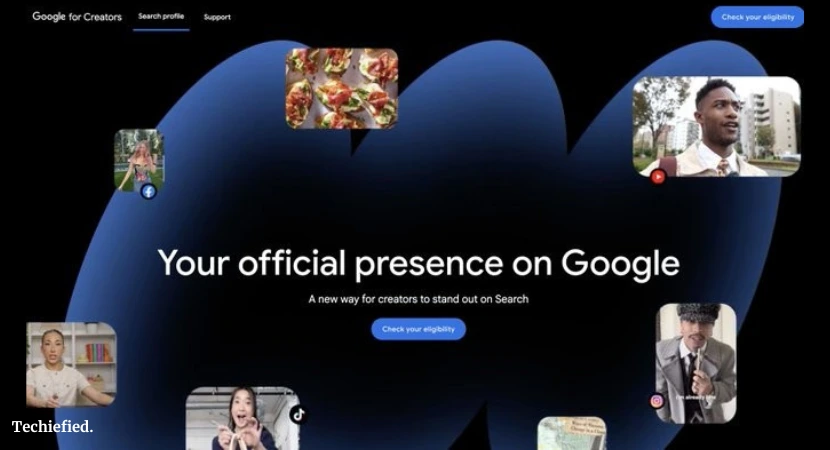
Google has rolled out Search Profiles for creators and publishers, giving eligible accounts a dedicated presence inside Google Search. The feature lets creators with a sizeable following of 100K across social platforms show a bio, profile photo, social links, and pinned content. Google Search Profiles feature will also let creators show recent posts from YouTube, Instagram, Twitter (X), and TikTok.
The newly launched Google Search Profiles matter because it gives social creators another way to control how they appear in Google Search. It also makes it easier for users to find current, verified information about celebrities and brands they already follow.
Google says the rollout begins in the U.S. and is limited to creators who meet its follower thresholds. To claim a profile, eligible users can go to profile.google.com/claim.
What is Google Search Profiles Update
Google Search Profiles are dedicated creator pages inside Google Search. They let eligible publishers and creators show a bio, profile picture, links, and recent content in one place, including posts from YouTube, Instagram, X, and TikTok.
Google is using this format to give creators more control over how they appear in Search and to help users find more current information from the source itself.
Early examples include Delish and The Traveling Echo, which shows the feature is already being used by both publishers and niche creators.
What is Included in Google Search Profile
A Google Search Profile can include a bio, profile image, website links, social accounts, pinned content, and recent articles, videos, or posts. Google is making the profile a single place where users can see the creator’s latest updates without searching across multiple platforms.
This matters for publishers and creators who has monetized audience, because it keeps their most recent content visible in Search. It also gives them a cleaner public-facing profile that sits closer to the audience’s search behavior.
What is Eligibility Criteria for Google Search Profiles
Google limits the rollout based on geography and audience size thresholds. The feature is currently available to creators in the USA who are 18 years or older.
Accounts must meet specific follower thresholds on at least one social media platform:
- 100,000 subscribers on YouTube
- 100,000 followers on Instagram
- 100,000 followers on X
- 300,000 followers on TikTok
Creators who already have a standard Google Knowledge Panel can upgrade to the new layout. To begin verification, users visit profile.google.com/claim. The verification portal checks the active session against existing Google Knowledge Graph nodes.
If Google recognizes the entity, it prompts the user to log into the corresponding third-party platforms via authentication protocols to confirm account ownership.
For social media creators without an existing panel, the manual review process checks public follower counts across the linked applications before provisioning the space.
Google plans to expand the feature to other countries later.
Why Google Wants Social Feeds in Search
The launch changes how Google handles social media content. Users frequently search for information directly inside native social video applications. By embedding live feeds from TikTok and Instagram into search results, Google retains users on its own platform.
Data from Google search trends shows a shift in younger demographics using social networks as primary search engines. Google aims to capture this traffic by turning the search engine into a direct destination for content consumption.
The system updates the Google Knowledge Graph. It changes how Google identifies search entities by connecting different social media handles to a single, verified identity.
Google Search Profiles: Way Forward For Tech Brands
This update shifts entity search strategies for publishers. Digital brands near the 100,000 follower mark must use matching handles across all platforms. Inconsistent usernames prevent the Knowledge Graph from matching accounts during the verification process.
Verified profiles also change data sourcing for artificial intelligence search tools. Large language models gather data from these official profiles to answer user queries about specific people or brands. Managing this search profile ensures AI engines pull verified biographical facts and current content links.
