
Most people asking how creators make money online are looking at the wrong number. Subscriber count. View count. Viral posts. None of that pays the bills on its own.
A creator with 50,000 subscribers can out-earn one with 500,000 if they sell the right things to the right audience. That’s the actual mechanics of creator monetization income in 2026.
Content is still one of the lowest-cost businesses you can start. A smartphone, a laptop, and a focused topic are enough to begin. The hard part is building a system that converts attention into consistent income.
The question isn’t whether you can make money as a creator. Thousands already do. The better question is which monetization streams fit your audience, your content type, and where you are right now in your growth.
How Do Content Creators Make Money Online in 2026?
Most creators make money online through a combination of ad revenue, sponsorships, affiliate marketing, donations, memberships, digital products, online courses, and paid communities.
Some income sources produce quick cash. Others take longer to build but generate recurring revenue month after month.
Here’s a quick comparison.
| Revenue Stream | Beginner Friendly | Scalable | Recurring Income |
|---|---|---|---|
| Ad Revenue | Yes | Medium | No |
| Sponsorships | No | High | No |
| Affiliate Marketing | Yes | High | Partial |
| Donations | Yes | Medium | No |
| Memberships | Medium | High | Yes |
| Digital Products | Medium | High | Yes |
| Online Courses | Medium | High | Yes |
| Paid Communities | Medium | High | Yes |
A creator with a small audience can earn money online through affiliate marketing and donations.
A creator with an established audience often earns online from memberships, products, sponsorships, and community subscriptions.
The strongest creator businesses usually combine multiple revenue streams. If one source drops, the business continues generating income from the others.
Best Ways For Content Creators to Make Money Online in 2026
Here are the practical monetization ways creators use to make money online:
1. Ad Revenue
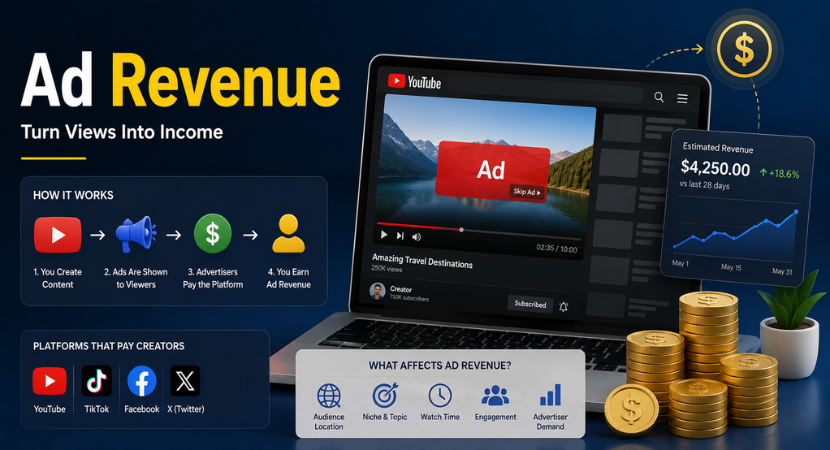
Platforms place ads before, during, or beside content and share a portion of that revenue with creators. The amount earned depends on factors such as audience location, content category, advertiser demand, watch time, and engagement.
YouTube states that creators in the YouTube Partner Program can earn a share of advertising revenue generated from their videos.
YouTube does not guarantee earnings because advertiser demand changes constantly.
How Creator Ad Revenue Works
Most major platforms use a revenue-sharing model.
A creator publishes content. Advertisers pay the platform. The platform shares part of that revenue with eligible creators.
The exact calculation varies by platform and changes over time. YouTube, TikTok, Facebook, and X all use different monetization systems.
Popular Platforms That Pay Creators to Make Money Online
| Platform | Main Monetization Method |
|---|---|
| YouTube | Ad revenue sharing |
| TikTok | Creator Rewards Program |
| In-stream ads and content monetization | |
| X | Revenue sharing for eligible creators |
| Medium | Member reading time payouts |
YouTube remains the largest creator advertising ecosystem. TikTok’s Creator Rewards Program pays eligible creators based on qualified views and RPM calculations. Ad revenue, however, scales directly with views — which means driving consistent traffic to your content is the real lever behind higher ad earnings.
How Much Can Creators Earn From Ads?
There is no universal payout rate.
A finance creator targeting the USA can earn several times more per thousand views than a gaming creator targeting lower-advertising markets.
Independent creator earnings data published in 2026 shows YouTube RPMs commonly ranging from around $1 to $15 per 1,000 views depending on audience location and niche.
Because payout rates change constantly, any article claiming a fixed amount per thousand views should be treated carefully.
Example: MrBeast
MrBeast built one of the largest creator businesses in the world.
His success extends far beyond YouTube ads. His businesses include Feastables, merchandise, media ventures, and brand partnerships. Public reporting shows his company generated hundreds of millions of dollars in annual revenue, illustrating how top creators eventually expand beyond advertising income alone.
For most creators, ad revenue is a starting point. Long-term income usually comes from combining ads with sponsorships, affiliate marketing, products, memberships, and community subscriptions.
2. Sponsorships and Brand Deals
Many full-time creators earn more from sponsorships than from platform advertising.
Brands pay creators to promote products, software, services, events, or campaigns to their audience. Payment can be a flat fee, commission, revenue share, or a combination of all three. For creators working with international brands, choosing the right way to receive payments can make cross-border deals much easier.
A creator with 25,000 highly engaged subscribers can sometimes command better sponsorship rates than a creator with 250,000 passive followers.
Why Brands Pay Creators for Monetization
Creators have something brands want, i.e., trust!
People often spend years following the same creator. They watch videos, read newsletters, join communities, and interact with content regularly.
That relationship can influence purchasing decisions more effectively than many traditional ads.
How Sponsorship Deals Usually Work
Common sponsorship formats include:
- Dedicated videos
- Newsletter sponsorships
- Podcast sponsorships
- Product mentions
- Social media integrations
- Long-term ambassador partnerships
Some creators work directly with brands. Others use creator marketplaces and influencer networks.
Why Sponsorships Scale Faster Than Ads
Sponsorships depend on audience quality.
A creator publishing tutorials for software buyers may generate fewer views than an entertainment channel, yet still attract higher-paying sponsors because the audience has stronger purchasing intent.
This is one reason many B2B creators prioritize sponsorships and affiliate partnerships early.
Example: Ali Abdaal
Ali Abdaal built multiple revenue streams through sponsorships, courses, products, and business ventures alongside YouTube content.
His public content frequently discusses diversification because creator businesses become more stable when income comes from several sources rather than a single platform.
Sponsorships Work Best When
- Your audience trusts your recommendations
- You publish consistently
- Your niche has commercial intent
- You can demonstrate engagement metrics
Creators often combine sponsorships with affiliate marketing. The sponsor pays an upfront fee, while affiliate commissions generate additional revenue when viewers purchase through tracked links.
3. Affiliate Marketing
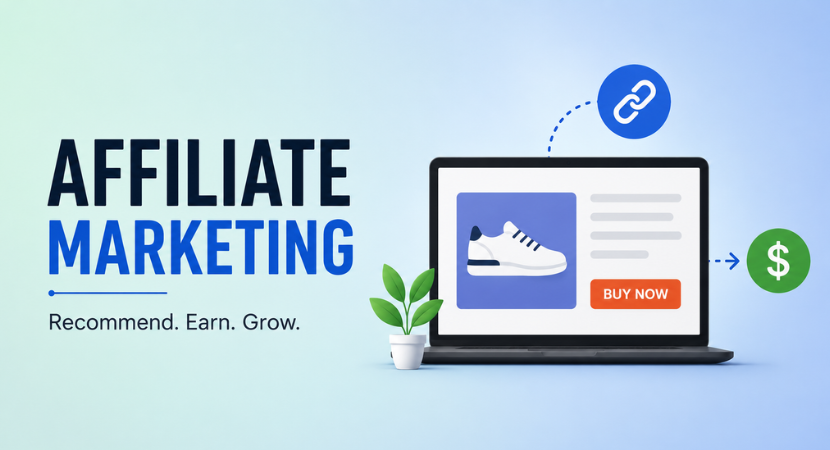
Many creators consider affiliate marketing one of the most reliable income streams to make money online because it does not require large audiences, sponsorship deals, or a product of your own.
You recommend a product or service. If someone buys through your referral link, you earn a commission.
How Affiliate Marketing Works
Most affiliate programs provide creators with a unique tracking link.
When a reader, viewer, or subscriber purchases through that link, the creator earns a percentage of the sale or a fixed commission.
Common affiliate categories include:
- SaaS tools
- Web hosting
- AI software
- Creator tools
- Online courses
- Financial products
- E-commerce platforms
Commission structures vary significantly.
Some programs pay a one-time commission. Others pay recurring commissions for as long as the customer remains subscribed.
Why Small Creators Often Succeed With Affiliate Marketing
Affiliate marketing rewards buying intent more than audience size.
A creator publishing tutorials about email marketing software may earn more affiliate revenue than a lifestyle creator with a much larger audience.
Growing your presence on social platforms can help reach that kind of intent-driven audience faster.
The audience is actively researching products and looking for recommendations.
That creates stronger conversion rates.
Affiliate Content That Generates Revenue
The highest-converting affiliate content usually targets people already researching a purchase.
Examples include:
- Product reviews
- Alternatives articles
- Comparison articles
- Setup tutorials
- Best tools lists
- Case studies
A search such as “best email marketing software” typically carries stronger commercial intent than a general educational article.
Example: Pat Flynn
Pat Flynn publicly documented affiliate marketing earnings for years through his Smart Passive Income reports.
His approach focused on publishing tutorials, case studies, and transparent recommendations rather than placing affiliate links everywhere. The strategy helped build trust and long-term revenue.
Common Affiliate Marketing Mistakes
Many creators make the same mistakes:
- Promoting products they have never used
- Joining dozens of affiliate programs
- Recommending low-quality tools
- Ignoring audience fit
- Chasing high commissions over relevance
The strongest affiliate businesses are built around trust.
When people repeatedly find your recommendations useful, they are more likely to purchase through your future recommendations.
How Long Does Affiliate Marketing Take?
Results vary.
Some creators earn their first commission within weeks. Others spend months building content before seeing meaningful revenue.
Affiliate marketing works best when it compounds over time. A review article published today can continue generating commissions years later if it ranks in search results or receives ongoing traffic.
4. Donations and Fan Support
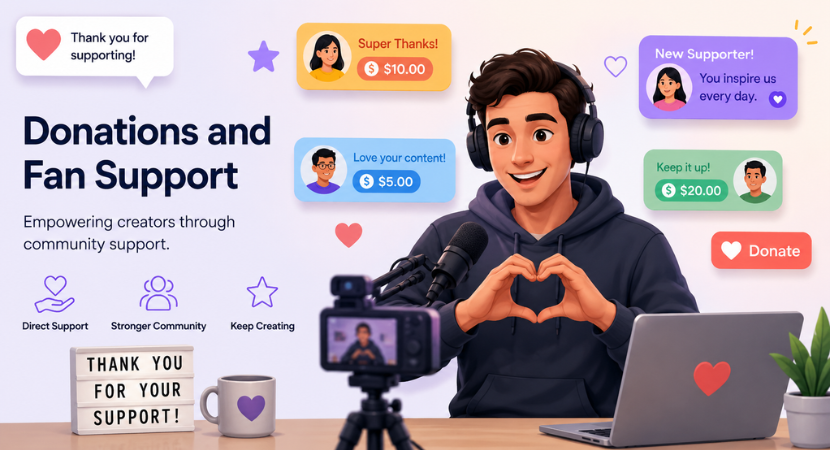
Donations allow creators to receive direct financial support from their audience.
A viewer enjoys your content, clicks a support button, and sends money without purchasing a product or subscription.
This model has become popular among writers, artists, podcasters, YouTubers, developers, educators, and newsletter creators.
Why Fans Support Creators
People often support creators for simple reasons:
- They regularly consume the content
- They want the creator to continue publishing
- They appreciate a specific tutorial, guide, or resource
- They prefer direct support over advertising
Popular Donation Platforms
Several platforms specialize in creator donations and fan support. Some of the most widely used options include:
- Buy Me a Coffee
- Ko-fi
- Patreon
When Donations Work Best For Creators to Make Money Online
Donations often perform well when creators publish:
- Educational content
- Open-source projects
- Newsletters
- Podcasts
- Community resources
- Free tutorials
The audience receives ongoing value and chooses to support the creator voluntarily.
Example: Amanda Palmer
Amanda Palmer became one of the most cited examples of fan-supported creation through crowdfunding and direct audience support.
Her work demonstrated that dedicated audiences are often willing to financially support creators whose work they value consistently.
When Creators Outgrow Buy Me a Coffee
Buy Me a Coffee works well for creators who want a simple way to accept support.
As audiences grow, some creators need additional functionality such as memberships, digital product sales, community access, advanced customization, or lower transaction costs.
If you’re comparing options, our guide to Buy Me a Coffee alternatives breaks down the strengths and limitations of major platforms and explains which creator types each platform fits best.
Donations vs Memberships: Best Way to Make Money Online
| Factor | Donations | Memberships |
|---|---|---|
| Commitment | One-time | Recurring |
| Predictability | Low | Higher |
| Setup Complexity | Low | Medium |
| Audience Requirement | Small to Large | Usually requires a loyal audience |
| Revenue Stability | Variable | More consistent |
Many creators start with donations because implementation is simple.
As their audience grows, memberships and recurring subscriptions often become part of the revenue mix.
5. Membership Programs
Many creators reach a point where one-time donations are no longer enough.
They have a loyal audience. People return every week. Readers open every newsletter. Subscribers watch every video.
A membership program gives those followers a way to support the creator on a recurring basis.
Instead of sending a one-time payment, members pay monthly or annually in exchange for exclusive benefits.
What Is a Creator Membership?
A membership is a subscription-based relationship between a creator and their audience.
Common membership benefits include:
- Exclusive content
- Private communities
- Live Q&A sessions
- Early access to content
- Members-only newsletters
- Downloadable resources
Some creators publish bonus content. Others focus on access and community.
Why Recurring Revenue Matters
Recurring revenue makes planning easier.
A creator earning $5,000 from sponsorships one month and $500 the next faces constant uncertainty.
A membership base creates more predictable cash flow.
Popular Membership Platforms
Some of the most widely used membership platforms include:
- Patreon
- Buy Me a Coffee
- Circle
- Substack
Example: Sam Harris
Sam Harris uses a subscription model for premium podcast content through his Waking Up ecosystem.
The approach illustrates how creators can build recurring revenue around exclusive access rather than relying entirely on advertising or sponsorships.
What Makes Memberships Work to Make Money Online
Memberships tend to perform best when creators publish consistently.
People subscribe because they expect ongoing value.
Creators often succeed when they:
- Publish regularly
- Communicate directly with members
- Deliver exclusive content
- Build a sense of community
- Create clear reasons to stay subscribed
Memberships vs Donations to Make Money Online
Many successful creators use both. Donations provide casual support. Memberships provide recurring revenue from their most engaged followers.
6. Selling Digital Products to Make Money Online
Digital products remain one of the highest-margin creator business models.
There is no inventory to manage. No shipping costs. No manufacturing delays. The creator builds the product once and can sell it repeatedly.
That simplicity explains why many experienced creators eventually launch digital products alongside their content.
Popular Digital Products For Creators in 2026
The most common creator products to make money online for creators include:
- Ebooks
- Templates
- Notion systems
- AI prompts
- Design assets
- Swipe files
- Research reports
- Premium guides
- Spreadsheet templates
The best-selling products usually solve a specific problem as customers buy shortcuts, frameworks, processes, or solutions.
Why Digital Products Appeal to Creators
Advertising rates can change. Sponsorship opportunities can disappear. A creator-owned product remains under the creator’s control.
That control makes products an attractive revenue stream for long-term businesses.
Example: Justin Welsh
Justin Welsh built a significant creator business around digital products, courses, and educational resources.
His public content frequently discusses audience building and product-led creator businesses.
The model demonstrates how expertise can be packaged into products that continue generating revenue beyond content publishing.
What Makes a Digital Product Successful?
Most successful creator products share a few characteristics. They are:
- Easy to understand
- Closely related to audience needs
- Fast to consume
- Priced appropriately
- Supported by trust built through content
A finance creator might sell budgeting templates. A designer might sell UI kits. A marketer might sell content frameworks.
Audience fit matters more than product complexity.
How Much Can Creators Earn Money Online From Digital Products?
Some creators generate a few hundred dollars per month. Others build seven-figure businesses.
There is no reliable industry-wide average because pricing, audience size, niche, and product type differ substantially.
Many creators publicly share revenue numbers. Few publish complete financial data. Any article claiming typical earnings across all digital products should be treated cautiously.
7. Selling Online Courses
Online courses remain one of the most common ways creators monetize expertise.
A course allows a creator to package knowledge into a structured format that students can follow at their own pace.
Course topics span almost every niche:
- Content creation
- Marketing
- Design
- Programming
- Fitness
- Photography
- Finance
- Language learning
When Should Creators Launch a Monetized Course?
Most successful courses come after a creator has built audience trust.
The audience already knows the creator’s expertise and wants a deeper learning experience than free content can provide.
A practical signal is repeated audience demand. If subscribers keep asking the same questions, a course may be worth considering.
What Makes a Course Successful?
Course sales depend heavily on outcomes.
Students usually buy courses because they want a specific result:
- Learn a skill
- Solve a problem
- Save time
- Avoid mistakes
Clear outcomes often outperform large course libraries packed with information.
Example: Ali Abdaal
Ali Abdaal publicly sells educational programs focused on productivity, content creation, and business building.
His business demonstrates how creators can combine content, courses, sponsorships, and products into multiple revenue streams.
What are The Course Platforms Creators Commonly Use for Monetization
Popular course platforms include:
- Teachable
- Kajabi
- Thinkific
- Podia
8. Building Paid Communities
Paid communities have become a major creator revenue stream.
Members pay for access to discussions, networking opportunities, expert guidance, events, accountability, or specialized knowledge.
Community subscriptions often generate recurring revenue while creating stronger relationships between creators and their audiences.
What Is a Paid Community?
A paid community charges a recurring fee for access.
Benefits often include:
- Private discussion spaces
- Group coaching
- Live events
- Networking opportunities
- Exclusive resources
- Direct creator access
Different communities provide different forms of value.
Some focus on education. Others focus on accountability, networking, or peer support.
Why Communities Generate Recurring Revenue
People often stay subscribed because of relationships formed inside the community.
New content can attract members. Active participation often keeps them engaged over time.
This is one reason many creators eventually add community access to memberships and courses.
Popular Community Platforms to Make Money Online
Widely used community platforms include:
- Circle
- Skool
- Discord
- Mighty Networks
Example: Codie Sanchez
Codie Sanchez has publicly discussed community-driven business models alongside content, newsletters, courses, and acquisitions.
Her approach reflects a broader trend among creators building businesses around audience relationships rather than relying solely on platform algorithms.
Communities vs Memberships
The difference usually comes down to what members value most:
| Type | Primary Value |
|---|---|
| Membership | Exclusive content |
| Community | Access to people and discussions |
9. Merchandise and Creator Commerce
Merchandise remains a revenue source for creators with highly engaged audiences.
The model is simple. A creator sells branded products directly to supporters. The audience gets a product and the creator earns a profit.
What are The Types of Creator Merchandise
Physical merchandise includes:
- T-shirts
- Hoodies
- Hats
- Stickers
- Posters
- Books
Digital-first merchandise can include:
- Wallpapers
- Digital art
- Printable products
- Downloadable assets
Print-on-Demand Changed Creator Commerce
Print-on-demand services reduced the barriers to selling merchandise.
Creators no longer need to order large amounts of inventory upfront.
Products are manufactured after a purchase occurs.
Popular providers include:
- Printful
- Printify
Example: MrBeast
MrBeast expanded beyond advertising through merchandise, consumer products, sponsorships, and business ventures.
His business demonstrates how creator brands can extend into multiple product categories.
Is Making Money Online With Merchandise Worth It in 2026?
Merchandise tends to perform best when:
- The creator has a strong brand identity
- The audience feels connected to the creator
- Products have genuine appeal beyond branding
For many creators, merchandise becomes a supplementary revenue stream rather than the primary source of income.
The Best Creator Revenue Stack in 2026
Most full-time creators eventually build a revenue stack. Different income streams support different stages of growth.
For New Creators
Recommended focus:
- Affiliate marketing
- Donations
- Ad revenue
These models require minimal setup and can begin generating income with relatively small audiences.
For Growing Creators
Recommended focus:
- Sponsorships
- Memberships
- Digital products
At this stage, audience trust often becomes more important than audience size.
For Established Creators
Recommended focus:
- Courses
- Communities
- Products
- Sponsorships
These creators typically have enough audience demand to support multiple offers simultaneously.
Common Mistakes Creators Make When Monetizing
Relying on One Revenue Source
Platforms, algorithms, and advertiser spending changes. Income diversification reduces risk.
Launching Products Too Early
Many creators attempt to sell before understanding audience needs. Audience feedback usually produces stronger products than assumptions.
Ignoring Email Lists
Email remains one of the few audience channels creators directly control. Subscribers can be reached regardless of platform changes.
Focusing on Followers Instead of Buyers
Large audiences do not automatically produce revenue. Many profitable creator businesses are built around smaller audiences with strong engagement and purchasing intent.
Ending Note
Successful creators rarely rely on a single income source. The strongest approach to how content creators make money in 2026 is combining affiliate marketing, sponsorships, memberships, digital products, online courses, and creator donations into a diversified revenue strategy. Whether you’re building a YouTube channel, newsletter, podcast, or online community, the creators earning income consistently today are treating content creation as a business, not a hobby.
FAQs on Creators to Make Money Online
Q1: Can Small Creators Make Money Online?
Yes. Many creators earn their first income long before reaching large audience numbers.
Audience quality usually matters more than audience size. A creator with 1,000 engaged subscribers often earns more than a creator with 50,000 passive followers.
Q2: How Many Followers Do You Need To Make Money?
There is no universal number.
Affiliate marketing can generate commissions with a small audience if the content targets buyers.
Sponsorship opportunities often appear once creators establish a consistent audience and engagement.
Memberships, courses, and digital products depend more on audience trust than follower count.
Q3: What is the most profitable source for creators to make money online?
For many creators, digital products, courses, and memberships generate higher profit margins than ad revenue because there is no platform taking a large share of earnings.
Affiliate marketing can also become highly profitable when creators publish content around products their audience already wants to buy.
Top creators often combine several revenue streams instead of relying on a single source.
Q4: Are Donations Better Than Memberships to make money online?
Donations work well when supporters want a simple way to contribute financially without making a long-term commitment.
Memberships create recurring revenue and often provide more predictable income.
Many creators use both models simultaneously.
Q5: Can Creators Make Passive Income?
Some creator income can become partially passive. Examples include:
- Affiliate commissions
- Digital product sales
- Course sales
- Advertising revenue from evergreen content
Q6: What are the best side hustles that actually pay?
Popular options include:
- Affiliate marketing
- Freelance services
- Newsletter publishing
- Digital products
- Online courses
- YouTube channels
- Niche websites
- Paid communities
