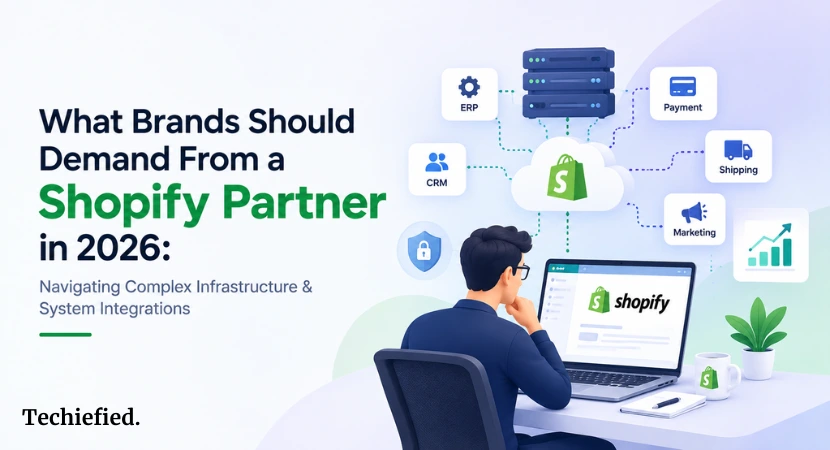
Most scaling brands don’t run on Shopify alone. They run on Shopify plus an ERP, an inventory system, a CRM, a fulfillment tool, maybe a 3PL app, maybe a custom checkout. Each piece works fine on its own. The problem starts when they all have to talk to each other.
Building those connections is often harder than building the storefront itself. You’re not just wiring up APIs, you’re dealing with mismatched data formats, security rules, user permissions, old databases, and workflows that need to run automatically and in real time. Here’s what to demand from a technical partner before you hand them the keys.
What happens when your systems don’t talk to each other?
You get manual data entry, and manual data entry means mistakes. Picture a customer updating their shipping address, canceling an order, or asking for a refund. That change needs to hit every connected system immediately: the storefront, the inventory tool, the warehouse system, the payment gateway, support, billing.
If your systems aren’t synced, someone on your team is copying that update by hand into five different places. That’s slow, and it’s where errors creep in.
A solid partner builds centralized middleware or event-driven architecture instead of stitching together one-off scripts between each pair of systems. That event-driven setup is what eventually lets merchants plug into no-code automation tools for daily operations, instead of manually reconciling every system by hand.
Why does API architecture matter more as you add tools?
Because the connections multiply fast. Run eight systems that all talk directly to each other, and you’re managing a lot more than eight relationships.
Each one needs proper handling for REST or GraphQL protocols, authentication and token management, error handling with retry queues, rate limiting, and real-time webhooks.
One broken link can stall the business. Say your inventory sync API drops out during a flash sale. Customers buy stock you don’t have. Now you’re dealing with fulfillment delays and annoyed customers.
A Shopify partner worth hiring builds fail-safes and monitoring so one glitch doesn’t turn into a customer-facing mess.
Can a modern Shopify setup work with your old systems?
Yes, and for a lot of brands it has to. Ripping out a legacy ERP or a custom database that’s run the business for years is expensive and risky. So the real job is connecting modern, headless Shopify setups to that older infrastructure without breaking it.
It’s a similar challenge to what most enterprises face when they try to bridge new platforms with decades-old systems without tearing everything down first.
That’s not simple. Legacy systems often have limited API support, thin documentation, odd data structures, and strict security constraints.
Teams looking to navigate these complex ecosystem requirements often partner with specialized engineering firms, such as Digital Heroes Co, to design scalable web architectures and custom integrations that bridge legacy software with modern e-commerce platforms.
What security standards should you require from an integration partner?
Role-based access control, audit logging, and encrypted token management, at minimum. Moving data between systems isn’t just a technical exercise. Different people (admins, warehouse staff, vendors) need different levels of access, and that has to be enforced consistently across every connected platform enforced consistently across every connected platform, following the same structured permission models larger tech stacks depend on.
You also need a real recovery plan for when a connection goes down, because it will. That means real-time error logging with alerts, automated retries for dropped requests, validation checks to catch corrupted data, and a documented process for manual override when something breaks badly enough that automation can’t fix it.
What’s the bottom line for brands hiring a Shopify technical partner in 2026?
A good storefront design isn’t enough. What actually keeps a scaling brand running is the middleware, the security, and the recovery plan behind the scenes. Brands that push their partners to build this properly will scale without the operational headaches that catch everyone else off guard.
