Travel podcast sounds interesting! Have you ever dreamed of hosting a travel show to share your adventures with the world?
Podcasting makes this possible for anyone, from anywhere. By capturing your journeys through audio recordings, you can transport listeners across the globe from the studio or on the road. 64% of US households are active podcast fans – so potential audience awaits!
This guide covers beginner equipment, tools, planning, promotion tactics, and creative inspiration to launch a basic DIY travel podcast even with no experience.
5 Essential Gears to Record a Travel Podcast
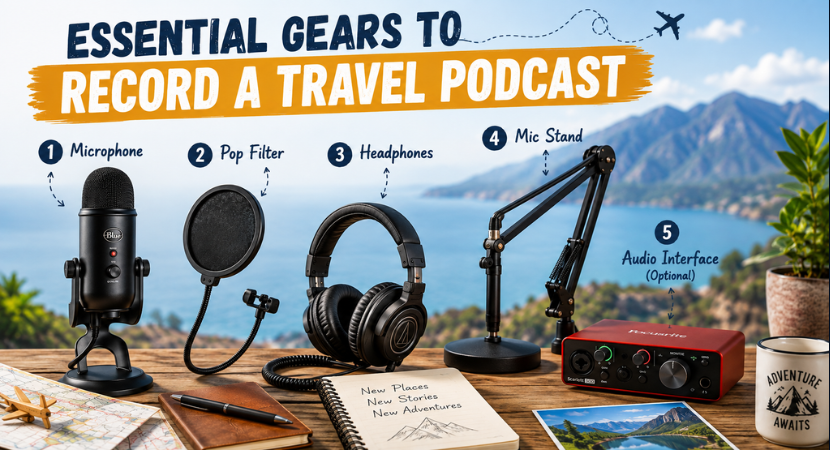
To record a travel podcast, you will need a few key pieces of basic equipment:
1. Microphone
A microphone clearly captures your voice and any interviews. The Blue Yeti USB Microphone ($120) works great for most hobby podcasters. It easily plugs into a computer. Look for mics with a headphone jack so you can listen as you record.
2. Pop Filter
Pop filters block distracting mouth noises like breathing and lip smacks. They attach to a mic stand in front of the microphone. You can pick up an inexpensive pop filter for $15-20 on Amazon.
3. Headphones
Quality over-ear studio headphones greatly improve your recording and editing process. They allow you to closely monitor sound inputs. Expect to spend $100+ for studio headphones optimized for audio editing.
4. Mic Stand
A sturdy mic stand securely holds the mic in place while recording episodes in your home studio. Mic stands start around $20, letting you position the mic at the ideal distance and height.
5. Audio Interface (Optional)
An external audio interface offers enhanced sound control and quality. But it’s not essential for beginners. Consider the Focusrite Scarlett Solo ($110) if wanting more pro tools.
3 Portable Recording Tips for Travel Podcast
Recording episodes on the go as you travel takes a bit more gear:
- Portable Recorder: A handy portable recorder device allows capturing top-notch sound anywhere. The Zoom H5 Handy Recorder ($300) produces professional studio quality recordings no matter where your travels take you.
- Memory Card: Portable recorders require SD cards or microSD cards to store your recordings. A 64 GB memory card ($20) easily holds hours of podcasting content. Bring extras when recording on extended trips.
- Stress-Free Mic Option: Clip-on lavalier microphones discretely attach to clothing for interviews on the move. Just take care not rustle or tap clothes near the sensitive mic. Lavalier mics cost around $30-40.
What Are Useful Editing Tools to Record Travel Podcast?
Quality editing tightens up recordings and creates a polished listening experience:
1. Audio Editing Software – Crucial Aspect for Travel Podcast
User-friendly audio editing programs like Audacity (free) or Hindenburg Journalist Pro ($95 one-time fee) allow editing episodes together. Expect to spend 2-5 hours editing per hour of raw recordings into smooth episodes.
2. The Levelator
The Levelator software normalizes all volume variances so listeners don’t have to adjust volume between segments. It’s $42 for the program to aid with podcast editing tasks.
3. Media Hosting
Media hosting sites like BuzzSprout efficiently share final podcast files. BuzzSprout offers generous free account options up to 5 hours total storage.
How to Create Captivating Travel Podcast Episodes
You need to deliver interesting stories through useful advice, rich sights and sounds, and interviews. b. Here are some of the tips to create engaging episodes for travel podcast:
1. Theme Ideas
Consider recurrent themes for episodes like food and culture, history, lodging and transportation, interviews with locals, off the beaten path destinations, etc. You can also repurpose your podcast content on social media stories by converting them into audio versions. They work great!
2. Prep Guiding Outline
Plan a general 2-3 points per 10-minute segment to create loose episode outlines. However, you have to allow conversations with guests for carrying a natural flow. Striking the right balance between structure and flexibility keeps episodes lively.
3. Outdoor Travel Podcast Equipment
If recording outdoor ambiance, pack basic tools like windscreens to block wind disruption ($8 for two-pack), mobile tripod to hold recorder steadily ($15), and emergency rain cover to protect equipment ($12).
4. Optimal Length
Episodes between 20-45 minutes tend to retain listener attention best for commute or walking timeslots. But occasionally releasing 60-90 minutes episodes works too. Find your reliable patterns.
How to Promote Your Travel Podcast
Distribution and marketing are key for building an audience. You can share your travel podcast via:
Beyond podcast platforms, creators can explore different methods for attracting more visitors to their websites and expanding their reach.
1. Major Podcast Platforms
Submit your episodes to popular podcast platforms like Spotify, Apple Podcasts, Google Podcasts, etc utilizing services like BuzzSprout for mass distribution.
2. Website Embedding
Add episodes right on your travel blog, portfolio or business website using embedded media players from BuzzSprout, Libsyn or SoundCloud.
Once your podcast starts attracting an audience, understanding ways creators can monetize their content can help you turn that attention into revenue.
3. Social Sharing
Share episode quotes, photos and trailers on social platforms. Use Instagram, Facebook, and YouTube Shorts. Take help from travel forums like Reddit and niche communities. Always welcome audience feedback and engagement.
For creators building an audience across multiple channels, choosing the right tools for creatives can also make content production and repurposing more efficient.
4. Guest Collaborations
Suggest swapping guest appearances on other shows in your genre. Cross-promote episodes to each other’s audiences. Invite people and be a guest on other platforms.
5. Pitch Media Outlets
That is important! Offer interesting exclusive content to travel outlets like Matador Network or Adventure Journal that aligns with their audiences. These outlets can help you skyrocket your travel podcast.
Wrap Up
And that wraps up this beginner’s guide to launching your travel podcast! We tried to provide a solid foundation pointing you where to start. Stay persistent through initial learning curves. Don’t get intimidated. Your unique experiences deserve an audience.
Let me know if you start podcasting after reading this! We would be thrilled to listen.
Frequently Asked Questions
Q#1. Do I need coding or technical skills?
Nope! Easy tools today help beginners launch podcasts without any coding or web skills. Focus on content and take advantage of platforms simplifying distribution.
Q#2. Can I record a podcast using my phone?
Phones work in a pinch but increase background noise. External mics and recorders vastly improve audio quality. For under $500, you can buy gear to sound like a pro.
Q#3. How much time does it take to record and edit episodes?
It depends. But generally, you have to spend 3-5 hours including recording, editing, optimizing sound levels and publishing per finished 30-minute episode when starting out. This ratio gets better over time as you systemize workflows.
Q#4. Should episodes tell one story or different segments?
Variety keeps listeners engaged best. Share 2-4 stories or segments per 20-45 minutes episode. Sprinkle in a unifying theme or tone as the through-line woven throughout if possible.
