cTrader is the closest full replacement for MetaTrader: same order execution model, better charting, wider broker support. ProRealTime wins on backtesting and automated systems. Match-Trader is the strongest pick for brokers who want the platform, CRM, and risk tools bundled together. TradingView is the best free option, with no broker account required.
MetaTrader still runs most retail forex and CFD accounts today, but tighter licensing terms and a stalled interface have traders and brokers actively looking for a replacement. Choosing the right platform depends on asset class, execution tools, and research features, which is why traders should also compare the financial markets platforms available today. This guide breaks down the real MetaTRader alternatives like cTrader, TradingView, NinjaTrader, Thinkorswim, ProRealTime for individual traders.
TradeLocker, Match-Trader, B2TRADER, SiRiX, and Quadcode for brokers and prop firms, with actual costs, migration steps, and regulatory notes most roundups skip.
Every recommendation is scoped to what you actually trade.
Best MetaTrader Alternatives at a Glance
| Platform | Best for | Cost | Automation language | Asset classes | Mobile | Broker availability |
|---|---|---|---|---|---|---|
| cTrader | ECN-style FX/CFD trading, algo developers | Free through supporting brokers | cAlgo (C#) | Forex, CFDs | Yes | Wide: Pepperstone, IC Markets, most ECN brokers |
| TradingView | Charting, multi-asset research | Free tier; paid plans roughly $13 to $240 a month billed annually (prices rose in April 2026) | Pine Script | Stocks, forex, crypto, futures, indices | Yes | Broad, via broker integrations like OANDA and Forex.com. Not a broker itself |
| NinjaTrader | Futures order flow, backtesting | Free for charting and simulation. Live trading: free, $99 a month, or $1,499 lifetime | NinjaScript (C#) | Futures. Limited forex and crypto via third parties | Yes, but limited | Mainly NinjaTrader Brokerage and futures brokers |
| Thinkorswim | US stock and options research | Free with a funded Charles Schwab account | thinkScript | US stocks, options, futures, forex | Yes | Only through Charles Schwab |
| ProRealTime | Systematic trading, backtesting | Free with delayed data. Real-time access roughly €10 to €36 a month, often waived by partner brokers | ProBuilder/ProOrder | Forex, CFDs, stocks, futures, indices | Yes | IG, Interactive Brokers, Saxo Bank, and other partner brokers |
| TradeLocker | Trader-facing UX for brokers and prop firms | Free to traders through supporting brokers. White-label pricing on request | None built in yet | Forex, CFDs | Yes | Growing broker and prop-firm list |
| Match-Trader | Full broker stack: platform, CRM, risk, payments | White-label pricing on request | None native; automation sits at the broker/CRM level | Forex, CFDs, crypto | Yes | Broker and prop-firm white-label |
| B2TRADER | Crypto spot and CFD brokers | White-label pricing on request | API-based, no retail scripting language | Crypto spot, CFDs | Yes | Broker white-label, crypto-CFD focused |
| SiRiX | Broker branding, social trading | White-label pricing on request | None native | Forex, CFDs | Yes | Leverate broker white-label |
Why Traders And Brokers Are Looking For MetaTrader Alternatives
Two events explain most of the shift, and neither is speculation.
Apple pulled MT4 and MT5 from the App Store on September 23, 2022, telling MetaQuotes only that the apps didn’t meet its guidelines.
The official reason was never disclosed, and Apple’s move sparked a range of speculation. Existing installs kept working, but new downloads and updates stopped for almost 6 months.
Apple reinstated both apps roughly six months later, after MetaQuotes said it had resolved the technical issues Apple had flagged. [source: VantageMirage News]
The theories at the time ranged from a Forbes report on a trader who lost over $1 million through a manipulated MetaTrader account, to MetaQuotes’ registration in Limassol, Cyprus, and speculation tied to sanctions on Russia, given the company’s Russian roots.
Nobody settled which one was true. What mattered for traders was simpler: an entire mobile user base lost access to its main platform overnight, with no warning and no explanation, over a decision made by two companies they had no direct relationship with.
The bigger issue for brokers and prop firms is licensing. MetaQuotes has discontinued MT4 white labels entirely, and MT5 white-label access now requires a full financial license, with no sub-label tier for a broker operating under someone else’s license.
Setup for a standard white-label deal typically runs $10,000 to $50,000, before ongoing fees.
In February 2024, MetaQuotes cut MT4/MT5 access for a wave of prop trading firms, reportedly over how they were onboarding US clients.
Funded Engineer had to drop its technology partner and switch to cTrader mid-operation to keep running.
The pattern hasn’t stopped. In 2026, MetaQuotes froze new MT4/MT5 licenses for brokers registered in Comoros as part of a wider offshore regulatory crackdown.
MetaTrader still runs the majority of retail FX accounts worldwide. But a broker or prop firm building its entire platform strategy on one vendor’s licensing terms is carrying a real, recurring risk, not a hypothetical one. That risk isn’t limited to licensing either — the server and infrastructure setup behind a platform matters just as much when uptime is on the line.”
The MetaTrader interface hasn’t moved much either. MT4’s core design is two decades old: dated order tickets, no native TradingView-style charting, and MQL, a scripting language most developers under 35 have never touched outside MetaTrader. (See how MT4 compares to MT5 if you’re still deciding which version to migrate from.)
Best MetaTrader Alternatives For Individual Traders
No platform here wins across every asset class. The right MetaTrader alternative depends on what you actually trade.
cTrader
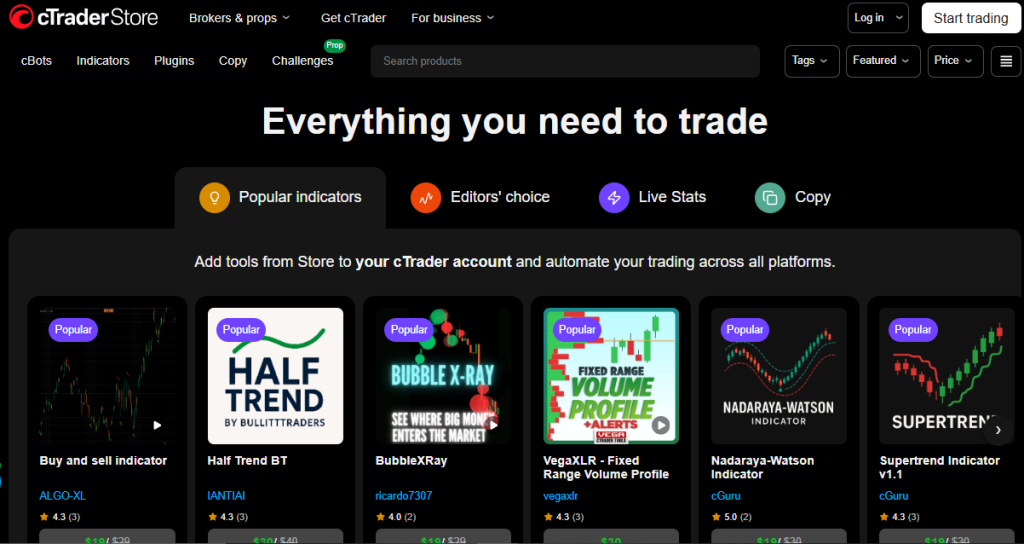
Established in 2011 by Spotware Systems, cTrader is an intuitive forex and CFD trading terminal offered by brokers including Pepperstone and IC Markets.
Automation runs on cAlgo, in C# instead of MQL. Similar automation trends are appearing across industries with the rise of AI automation workflow.
The catch: it only covers forex and CFDs, no stocks, and its EA and indicator marketplace is still smaller than MetaTrader’s after over a decade on the market.
TradingView

TradingView offers over 100 built-in technical indicators against MT4’s 30, plus access to 100,000+ community-developed tools.
Pine Script is easier to pick up than MQL for most traders coming from a non-developer background.
The tradeoff: TradingView isn’t a broker, so execution depends on a connected broker’s integration, and real-time data for some exchanges costs extra even on paid tiers.
NinjaTrader
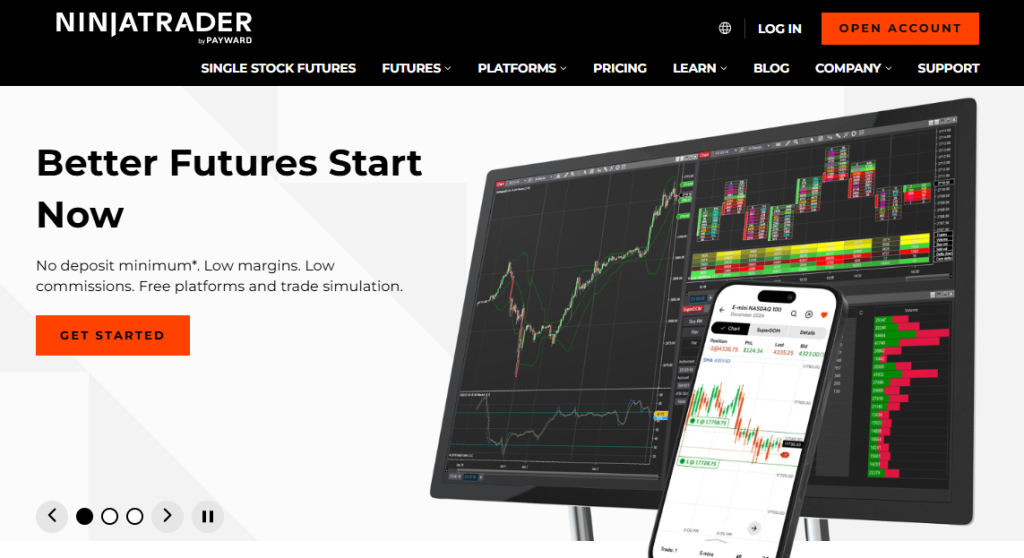
Advanced charting, backtesting, and unlimited simulated trading are always free, with no brokerage account or subscription required.
Live trading costs layer on top: free at $1.29/side standard contracts, $99 a month with rates dropping to $0.99/side, or a $1,499 lifetime license bringing the lowest rates to $0.59/side.
It’s Windows-only software, and its forex and stock coverage is thin next to its futures tools.
Thinkorswim
Thinkorswim is a MetaTrader alternative platform by TD Ameritrade, now under Schwab. It comes free with a funded account, no separate license. Its research tools, options chains, and risk graphs are hard to match at that price. Pair it with a dedicated stock screener tool if you need faster pre-trade filtering.
The limit is scope: it’s built around US stocks and options, so traders outside the US or focused purely on forex and CFDs won’t get much use out of it.
ProRealTime
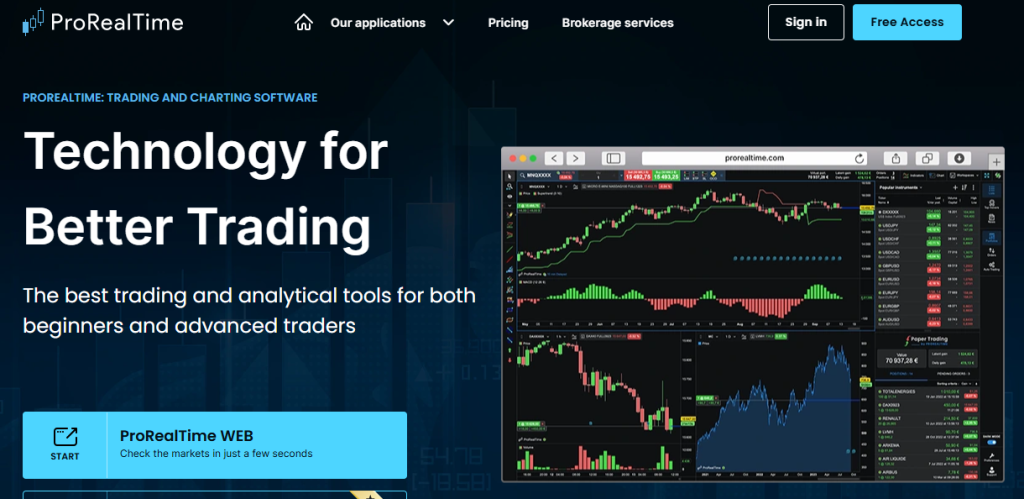
ProRealTime’s automated trading runs on ProBuilder, its built-in scripting language, paired with ProOrder, the module that executes the resulting strategies.
Also, this MetaTrader alternative platform passed 1,000,000 active users worldwide by the start of 2026.
The free tier only gives end-of-day data.
Real-time access runs roughly €10 to €36 a month unless a partner broker like IG or Interactive Brokers waives the fee for hitting a trade minimum.
Best MetaTrader Alternatives For Brokers And Prop Firms
This list assumes you’re picking an alternate MetaTrader platform to hand your clients, not one to trade on yourself. Uptime, CRM integration, and licensing terms matter more here than chart aesthetics.
Match-Trader
Match-Trader bundles the trading platform with a CRM, risk and dealing tools, and its own payment system, Match2Pay, letting traders top up accounts instantly without leaving the platform.
It’s lightweight enough to run well on basic smartphones, with automatic registration and instant deposits.
The tradeoff: it reads more like back-office infrastructure than a platform traders get excited about. Brokers wanting a flashier front end usually pair it with something else.
TradeLocker
TradeLocker builds native TradingView charting directly into the platform, with on-chart trade management and trailing stops, and a built-in risk calculator for position sizing.
It’s the platform most likely to make a broker’s front end look genuinely different from every other MT4 white label.
The gap: there’s no native scripting or automation language yet, so brokers with clients running EAs have nothing to migrate them to inside TradeLocker itself.
B2TRADER
B2TRADER is built by B2BROKER for crypto spot and CFD markets, capable of processing more than 3,000 requests per second and supporting over 3,000 assets, with direct ties into B2BROKER’s CRM and liquidity stack. Strong fit if a broker’s book leans crypto.
Weaker fit for a pure forex/CFD shop, since that isn’t what it’s built around.
SiRiX

SiRiX, by Leverate, focuses on customizable branded dashboards, advanced social trading, and integrated CRM and liquidity management.
Independent, third-party coverage of SiRiX is thin next to cTrader or Match-Trader. Most of what’s published comes from Leverate itself, so a live demo does more work here than the marketing copy does.
Quadcode Trading
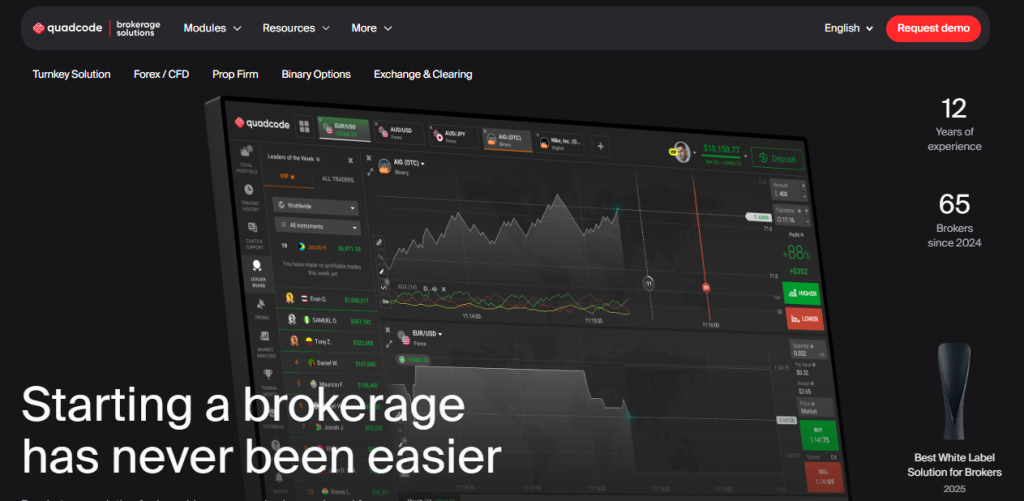
Quadcode Trading is a bespoke white-label MetaTrader alternative with a flexible instrument menu, a branded app, and a built-in KYC compliance module.
Like SiRiX, most available information comes from Quadcode’s own marketing rather than independent broker reviews.
So, a direct vendor conversation carries more weight than the public documentation.
Real Cost Comparison of MetaTrader Alternatives
Here is the real cost reviewed for MetaTrader alternatives:
What Individual Traders Pay
Current annual-billed ranges run roughly $13 to $15 a month for Essential, $30 to $35 for Plus, $60 to $70 for Premium, and $200 to $240 for Ultimate.
TradingView raised prices across every paid tier in April 2026, so treat these as live ranges and check TradingView’s own pricing page before quoting an exact figure to anyone.
NinjaTrader’s charting and simulated trading are free, no account required. Live trading runs on 3 tiers:
- free with standard commissions,
- $99 a month with lower commissions, or
- a one-time $1,499 lifetime license that unlocks the lowest available commission rates for the life of the account.
cTrader and ProRealTime don’t charge traders directly.
cTrader is free through any supporting broker.
ProRealTime is free with delayed data, and real-time access runs roughly €10 to €36 a month unless a partner broker waives it for active traders.
What Brokers And Prop Firms Pay
- An MT5 white label now costs roughly $10,000 a month, after MetaQuotes tightened its licensing terms.
- A cTrader white label runs around $5,000 setup plus $5,000 a month, with Spotware’s copy-trading app and cBroker admin tools included.
- Match-Trader’s white-label tier prices far lower, a fixed fee of roughly $2,000 to $3,500 for 1,000 live accounts, which is why smaller or newer brokers tend to start there.
TradeLocker, B2TRADER, SiRiX, and Quadcode don’t publish pricing anywhere, including their own sites. Budget for a sales call before you can put a real number next to any of the four. Funding accounts across borders carries its own fees, and a few providers handle that transfer better than others.
How to migrate Off MetaTrader
For individual traders
- Export trade history first. Open the Account History tab in MT4/MT5, right-click, and choose “Save as Report” for an HTML export, or pull raw data from the History Center if you’re archiving your own backtesting sets.
- List the EAs and custom indicators you actually use day to day, not everything you’ve ever downloaded. Most traders run 2 or 3 in practice.
- Rebuild, don’t expect a clean auto-convert. MQL4/5 doesn’t run on cAlgo, Pine Script, NinjaScript, or ProBuilder. Simple indicators convert reasonably well with third-party tools; anything with custom risk logic or multi-timeframe conditions needs a manual rewrite.
- Open a demo account on the new platform and mirror your live MetaTrader trades for 2 to 4 weeks before moving real capital. Score it on execution speed, how easily you can size a position, and how many mistakes you make placing orders.
- Move a small live position size first, and keep MetaTrader running in parallel until the new platform earns full trust.
For brokers and prop firms
- Audit MetaTrader dependence before shopping for a replacement: percentage of clients on MT4 vs MT5, how many run EAs, and how exposed the business is to a MetaQuotes licensing change.
- Export client account data, KYC records, and balance history from the MetaTrader backend into a format the new platform’s CRM can import. This step is usually the slowest part of the whole migration, not the platform swap itself.
- Run both platforms in parallel for a defined pilot window, typically a few weeks to a full quarter, with a subset of new signups before touching existing client accounts.
- Set a hard cutover date and tell clients well in advance. Settle or transfer open positions at a specific server time to avoid a pricing gap between the two platforms.
- Keep MetaTrader available as a fallback for clients who don’t want to move, while marketing the new platform as the default for new accounts.
What Are Regulation and Broker Compatibility for MetaTrader Alternatives
Which MetaTrader alternatives actually work depends on where the account sits, not just which platform looks better.
United States
Retail CFD trading is restricted under CFTC and SEC rules, which is part of why CFDs aren’t available to US clients on platforms like eToro.
Thinkorswim exists only through Charles Schwab, a US broker-dealer regulated by the SEC and FINRA, which makes it a solid regulated option for US stocks, options, and futures, but not for international forex or CFD accounts.
NinjaTrader sits in a similar spot: its brokerage arm is registered with the CFTC as a futures commission merchant and is an NFA member, covering futures but not forex or CFDs for most account types.
UK and EU
Regulated brokers here commonly offer cTrader and TradingView alongside MetaTrader.
- cTrader is offered by FCA and CySEC-regulated brokers including Pepperstone and IC Markets.
- ProRealTime runs through regulated partners like IG and Saxo Bank, with real-time data fees often waived for active accounts.
Offshore Jurisdictions
MetaQuotes froze new MT4/MT5 licenses for brokers registered in Comoros in 2026, part of a wider pullback from lighter-touch jurisdictions.
That trend points toward cTrader, Match-Trader, and TradeLocker filling the gap for offshore brokers, since none of them currently demand the same license tier MetaQuotes now requires for MT5.
Prop Firms Vs Retail Brokers
Prop firms face a different compatibility question as most run simulated or evaluation accounts.
That distinction is part of why MetaQuotes’ 2024 crackdown targeted prop firms specifically over how they onboarded US clients. And why a firm like Funded Engineer had to switch its underlying platform mid-operation rather than simply renew a license.
Mobile Experience Compared For MetaTrader Alternatives
Every platform in this roundup treats mobile as the secondary app, and the ratings show it.
| Platform | Mobile rating | Feature parity note |
|---|---|---|
| TradingView | 4.7/5 on Google Play, 717K+ reviews | Charting is close to full parity with desktop. Pine Script editing stays desktop and web only. |
| cTrader | 4.4 to 4.5/5 on Google Play, depending on the broker-branded version | Trading and charting are close to full parity. cAlgo bot development stays desktop only. |
| TradeLocker | 4.22/5 on Google Play (3,600+ ratings), 4.6/5 on Trustpilot (2,200+ reviews) | Built web-first, so mobile and desktop run close to the same app in different shells. |
| thinkorswim Mobile | 2.8/5 on Google Play | Ships as the smallest of Schwab’s 3 versions: no custom thinkScript studies, no OnDemand, fewer indicators than Desktop or Web. |
| NinjaTrader | No stable aggregate rating published | Only recently added a first-party mobile app, and it can’t run custom NinjaScript indicators or strategies. Mobile is order management, not the full platform. |
| ProRealTime | No dedicated Google Play score found; a third-party review aggregator puts general satisfaction around 4.5/5, not a Google Play number specifically | ProOrder automation and real-time data setup happen on desktop or web. Mobile is built for monitoring positions, not building systems. |
thinkorswim is the clearest case, since Schwab documents the cutbacks itself across its 3 app tiers.
TradingView and TradeLocker come closest to real parity, since both were built browser-first rather than retrofitted onto older desktop software.
Last Word on MetaTrader Alternatives
No platform here replaces MetaTrader for everyone. The right pick depends on what’s actually being traded and who’s choosing it.
For individual traders, cTrader is the closest like-for-like swap: same order execution model, better charting, a broker network almost as wide as MetaTrader’s. TradingView is the strongest free option and the deepest charting tool on this list. NinjaTrader fits futures traders specifically. Thinkorswim fits US stock and options traders with a Schwab account. ProRealTime fits systematic traders who backtest more than they discretionary-trade.
For brokers and prop firms, TradeLocker gives the clearest front-end upgrade over an MT4 white label. Match-Trader gives the most complete back-office bundle: platform, CRM, risk, and payments in one deal. B2TRADER fits a crypto-leaning book specifically. SiRiX and Quadcode are worth a live demo each, since neither has much independent coverage beyond their own marketing.
FAQs on MetaTrader Alternatives
Q#1. Is there a free alternative to MetaTrader?
Yes, several. cTrader is free through any broker offering it, with no license fee charged to the trader. TradingView’s free tier covers full charting across every asset class, though live order execution still needs a connected broker. NinjaTrader is free for charting and simulated trading. ProRealTime is free with delayed data, and real-time access needs either a subscription or enough trade volume with a partner broker to get it waived.
Q#2. Is MetaTrader shutting down?
No. MetaTrader still runs most retail forex and CFD accounts worldwide, and neither MetaQuotes nor any regulator has announced plans to discontinue it. What’s changing is licensing. MetaQuotes has discontinued MT4 white labels entirely, and MT5 white-label access now requires a full financial license from the broker, which has already pushed some brokers and prop firms toward other platforms. That’s a real cost and risk issue for brokers who relied on cheap white-label access. The platform itself isn’t going anywhere.
Q#3. Can I transfer my MetaTrader EAs to another platform?
Not directly. MQL4 and MQL5 are built specifically for MetaTrader and don’t run on cAlgo, Pine Script, NinjaScript, or ProBuilder. Automated MQ4-to-C# converters exist, but even the most established one only fully supports around 48% of older MQL4 indicators, and MQL5 code can’t be converted through these tools at all.
Q#4. Do prop firms accept TradingView?
Yes, but “accept” covers three different setups, and confusing them is the most common mistake traders make before paying for an evaluation. Some firms market “TradingView support” that’s really just charting, with actual order execution happening on a separate platform entirely. Forex-focused firms like FTMO typically route a TradingView alert through a bridge tool to an Expert Advisor running on MT5, which then places the trade. Futures-focused firms including Apex Trader Funding connect TradingView’s order panel directly to a Tradovate-backed account, letting traders place orders straight from the chart. Confirm which of the three a firm actually means before assuming full execution access.
Q#5. Is cTrader better than MT5?
Neither wins outright. cTrader is stronger on execution transparency: native Level II market depth, 54 timeframes against MT5’s 21, and C#, a language most developers already know, instead of MQL5’s steeper learning curve. MT5 is stronger on flexibility and ecosystem: it supports hedging and netting account modes in one platform, which matters for FIFO-regulated markets and multi-strategy setups, and its EA marketplace still dwarfs cTrader’s cBot store. Pick cTrader for transparent execution with a smaller, easier-to-audit automation library. Pick MT5 for multi-asset flexibility and a much larger existing strategy ecosystem.
